

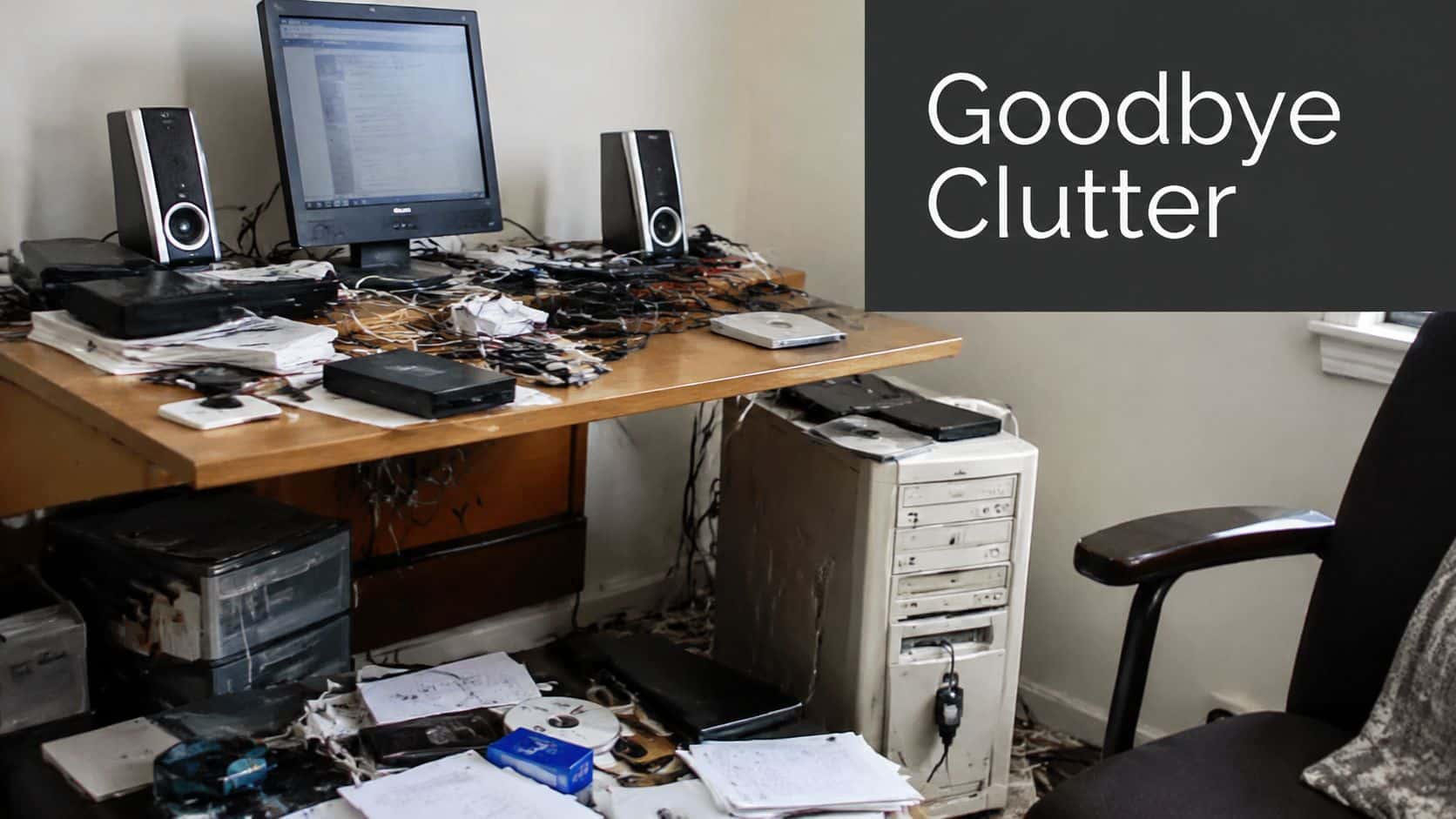
You're probably looking at one of two setups right now. Either you've got a desk with a monitor, a tower under it, a power bar full of plugs, and cables doing their best spaghetti impression, or you're trying to avoid that mess when you buy your next computer.
That's exactly where an all-in-one PC starts to make sense. It looks clean, takes up less room, and feels simpler on day one. But there's a trade-off most buying guides skip. The sleeker the machine, the less flexible it often is later. If you're shopping for a computer PC all in one, that long-term value question matters just as much as screen size or processor choice.
Table of Contents
- What Is a Computer PC All in One
- All in One vs Desktop vs Laptop A Clear Comparison
- Inside the All in One What You Can and Cannot Upgrade
- Buying Your First All in One PC A Practical Checklist
- Simple Maintenance to Keep Your AIO Running Smoothly
- When Your All in One Needs an Expert On-Site Help from Nerds 2 You
What Is a Computer PC All in One
A traditional desktop usually comes in pieces. You have a monitor on the desk, a tower on the floor or beside the monitor, plus cables for power, video, keyboard, mouse, speakers, and sometimes a webcam. It works fine, but it can make a small office feel crowded fast.
An all-in-one PC, often called an AIO, puts the main computer parts inside the display housing. It resembles a smart TV, except instead of streaming apps, it runs a full desktop operating system and handles everyday computing jobs such as email, bookkeeping, video calls, web browsing, and office work.
What sits inside the screen
In an AIO, the processor, motherboard, storage, and other core parts are built into the same unit as the screen. That's why you don't see a separate tower. For many home users, that single change makes the whole setup feel less intimidating.
A lot of people like AIOs because setup is straightforward. You place it on the desk, plug in power, connect a keyboard and mouse if needed, and you're close to ready. If you want a quick look at local options and repair considerations, Nerds 2 You has a page on desktop all-in-ones in Edmonton.
Practical rule: If your main goal is a tidy desk and simple setup, an AIO is often easier to live with than a tower-based desktop.
Why more people are considering them
This isn't a niche category anymore. The global all-in-one PC market was valued at USD 28.5 billion in 2025 and is projected to reach USD 45.8 billion by 2034, growing at a compound annual growth rate of 6.0%, with growth linked to remote work, online education, and gamers who want a compact, cable-minimised setup, according to Dataintelo's all-in-one PC market report.
That growth makes sense from what I see in real homes and small offices. People want less clutter, fewer separate parts, and a cleaner workspace that doesn't look like a back room at an IT shop.
Where people get confused
The big misunderstanding is this. Because an AIO looks like “just a screen,” some buyers assume it's only a monitor. Others assume it works like a regular desktop tower inside. Neither is fully true.
It's a full computer, but it borrows some design ideas from laptops. That's why it can be compact and clean. It's also why upgrade choices can be tighter later.
If you're curious how this style may keep evolving on the Apple side, these insights into future iMac upgrades are useful for seeing how manufacturers keep pushing the all-in-one concept toward slimmer, more integrated designs.
All in One vs Desktop vs Laptop A Clear Comparison
If you're choosing between an AIO, a traditional desktop, and a laptop, the right answer depends less on hype and more on how you work. A bookkeeper with a permanent desk has different needs than a student carrying a computer to class. A front reception desk has different needs than a home office where parts may need upgrades later.
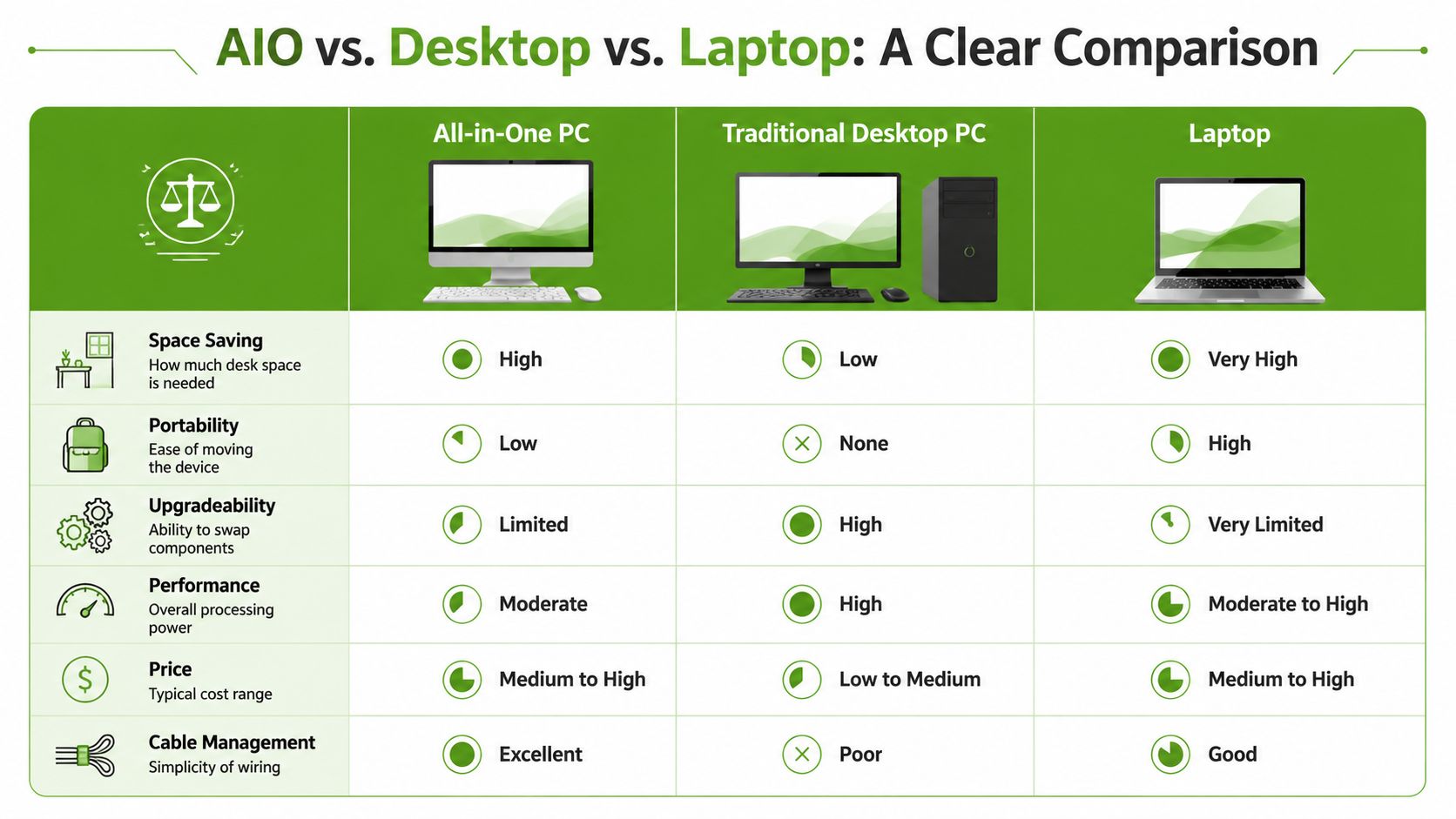
| Feature | All-in-One PC | Traditional Desktop | Laptop |
|---|---|---|---|
| Space saving | High | Low | Very high |
| Portability | Low | None | High |
| Upgradeability | Limited | High | Very limited |
| Performance | Moderate | High | Moderate to high |
| Price | Medium to high | Low to medium | Medium to high |
| Cable management | Excellent | Poor | Good |
Space and setup
AIOs are built for neat desks. According to CDW's buying guide, all-in-one PCs integrate the CPU, motherboard, display, and often speakers into a single compact unit, usually with screen sizes from 20 to 34 inches and common resolutions including 1080p Full HD (1920×1080) and 4K Ultra HD (3840×2160). CDW also notes that 24 to 28-inch models are a practical fit for many home office and professional workflows in its all-in-one PC buying guide.
A desktop tower needs more room, plain and simple. You've got the tower itself, the monitor, and more cables. A laptop wins on footprint, but many people end up docking it at a desk anyway, which adds chargers, hubs, and external displays back into the mix.
Performance and workload
A traditional desktop is still the easiest path if raw power is your main priority. It usually has better cooling space, more component choices, and easier future upgrades. That matters for heavy design work, advanced editing, or specialised software.
An AIO can still be a very capable machine for office apps, browser-heavy work, meetings, inventory systems, and family use. A laptop can also handle a lot, but thin designs may trade cooling room and repairability for portability.
A simple way to think about it. Desktop first for maximum flexibility, laptop first for mobility, AIO first for a clean permanent workspace.
Portability and daily use
Laptops are made to travel. They fold up, go into a bag, and work almost anywhere. That's why they're often the easiest answer for people who split time between home, office, and meetings. If your work is finance-focused and you're comparing mobile options, this roundup of ideal laptops for accounting professionals can help narrow the laptop side of the decision.
An AIO is technically movable, but not in the grab-and-go sense. It's more like moving a small TV. You can relocate it from one room to another, but you won't want to carry it around every day.
Cost and lifespan thinking
The cheapest path upfront is often a basic desktop or a budget laptop, depending on what peripherals you already own. An AIO often asks you to pay for the integrated design, the display, and the cleaner build.
That doesn't automatically make it poor value. It just means you should judge it differently. You're buying convenience, appearance, and space savings along with computing power.
Inside the All in One What You Can and Cannot Upgrade
This is the part that gets glossed over in sales pages. An all-in-one can look modern and simple on the outside while being much less flexible on the inside than a tower desktop.
If you picture a traditional desktop as a set of LEGO bricks, an AIO is closer to a sealed appliance. Some parts may still be serviceable. Others are packed tightly, custom-fitted, or attached in ways that make replacement impractical.
Parts that are sometimes upgradeable
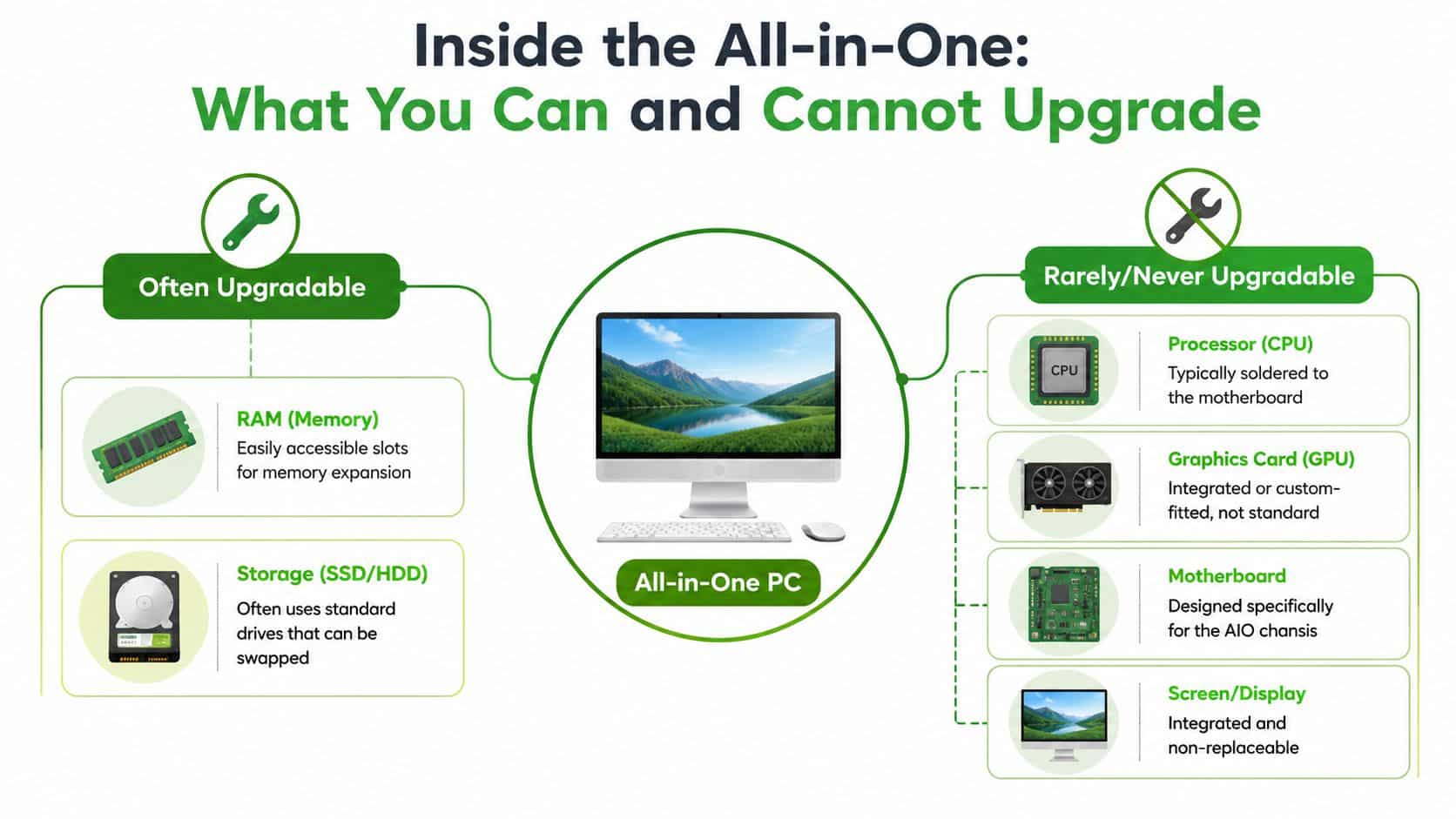
The two most common items that may be upgradeable are RAM and storage. Not every model allows both, but those are the first places technicians check.
If your computer slows down because it runs out of memory during multitasking, extra RAM can help. If it feels sluggish because of an ageing drive, storage replacement may help. If that's the issue, learning about a RAM upgrade for a PC gives you a good starting point for what memory changes can and can't solve.
Parts that usually are not
In many AIOs, the CPU and GPU are a major problem for long-term flexibility. They're often soldered or designed in ways that don't support standard replacement. The display assembly and motherboard are also closely tied to the machine's custom shape.
That's the hidden cost of the slim design. The tighter the packaging, the fewer easy swap-outs you get later.
If you buy an AIO, buy enough performance for the future, not just enough for today.
The trade-off most people miss
This isn't just a technical detail. It affects value over the life of the computer. Lenovo's glossary highlights an often-missed issue in AIO buying: a 2025 JTAC study found 68% of CA home users in Alberta assume all-in-ones are modular like traditional desktops, and that misunderstanding can lead to surprise disposal costs when upgrades fail. The same source warns that a $1,200 all-in-one may become obsolete 3 years faster than a $900 modular desktop, as discussed in Lenovo's article on what an all-in-one computer is.
That doesn't mean an AIO is a bad choice. It means you should buy one with open eyes. If your work is basic office use, video calls, browsing, and documents, limited upgradeability may never become a serious problem. If you expect to stretch the machine through many software changes, business growth, or heavier creative work, it matters a lot.
A practical buying mindset
Ask yourself one direct question. When this machine starts to feel slow, do you want to upgrade parts or replace the whole unit?
If you're comfortable replacing the system as one device every few years, an AIO can fit your life nicely. If you prefer replacing one part at a time, a modular desktop usually makes more sense.
Buying Your First All in One PC A Practical Checklist
Shopping for your first AIO goes better when you ignore flashy marketing and build a shortlist around your real tasks. A family computer for email and schoolwork doesn't need the same specs as a front office machine running bookkeeping software all day.
Start with how the computer will be used
Write down the top three things the machine must do. For many buyers, that list is something like web browsing, Microsoft 365, Zoom or Teams, and printing. For others, it includes photo work, accounting software, or managing a small business.
That list helps you avoid two common mistakes. Buying far more computer than you need, or buying a pretty machine that struggles after a short time.
Use this checklist before you buy
-
Screen size first: If the computer will sit on a small desk or kitchen counter, a moderate screen often feels more comfortable than an oversized one. If you keep many windows open at once, a larger display may be easier on the eyes.
-
Match the processor to the workload: General home use and office work usually don't need the highest-end chip available. Video editing, larger spreadsheets, and multitasking across many apps benefit from stronger processing power.
-
Don't skimp on memory: If you keep lots of browser tabs open, run accounting software, or switch between apps all day, memory matters. This is often more important to daily smoothness than people realise.
-
Choose SSD storage if possible: Solid-state storage helps the system feel snappier during startup, file opening, and app launching. Mechanical hard drives may still exist in some systems, but they tend to feel slower in everyday use.
-
Check the ports carefully: Look for the ports you already use. USB-A for older accessories, USB-C for newer devices, HDMI if you may need another display, and audio options if you use speakers or a headset.
-
Think about camera and speakers: A lot of buyers forget this because the machine looks self-contained. If video calls matter, check webcam placement, microphone quality, and whether built-in speakers will be enough.
A quick reality check before checkout
Read the spec sheet and then ask one plain-language question. “Will this still fit my work two or three years from now?”
That's where many AIO purchases go right or wrong. If the answer is uncertain, move up one level in processor, memory, or storage while you're still buying. With an all-in-one, it's often easier to spend a bit more upfront than to fix a weak configuration later.
Simple Maintenance to Keep Your AIO Running Smoothly
An AIO doesn't need complicated care, but it does need regular care. Dust, delayed updates, overloaded startup items, and neglected storage can make a perfectly good machine feel older than it is.
What home users can do safely
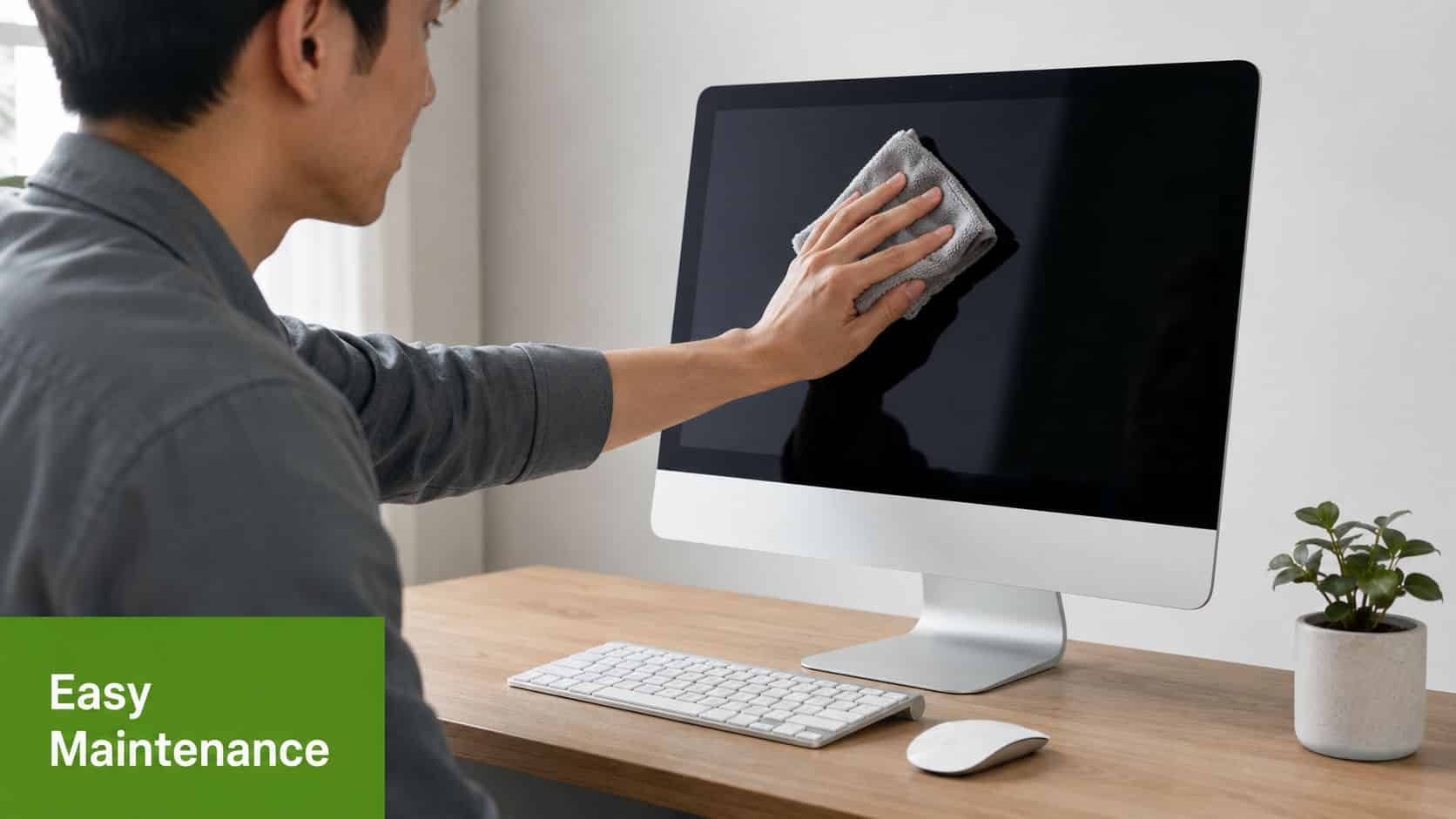
- Clean the screen gently: Use a clean microfibre cloth. Don't spray liquid directly onto the display.
- Keep vents clear: AIOs rely on airflow through a compact body. If papers, dust, or décor block the vents, heat builds up.
- Install updates: Operating system updates and app updates often fix bugs, improve compatibility, and patch security issues.
- Trim startup programs: If too many apps launch at boot, the machine may feel slow before you've even opened your work.
- Restart properly: People leave computers sleeping for long stretches. A proper restart can clear temporary slowdowns.
A slow computer isn't always “old.” Sometimes it's just overdue for cleanup, updates, and a restart.
When the symptoms mean more than maintenance
If the screen flickers, the fan runs loudly all the time, the system overheats, or it won't start reliably, stop treating it like a basic cleanup issue. Those signs can point to hardware trouble, failing storage, software corruption, or internal dust buildup that needs hands-on inspection.
Small habits make a big difference. Keep drinks away from the base, don't pinch cables behind the stand, and back up important files before trouble starts.
When Your All in One Needs an Expert On-Site Help from Nerds 2 You
Some problems are reasonable DIY jobs. Others are not. If your AIO won't power on, has a cracked screen, keeps crashing, shows signs of malware that won't go away, or may need data recovery, hands-on diagnosis is usually the safer move.
That matters even more with all-in-ones because the computer and display are one unit. Moving it to a shop can be awkward, and opening it without the right tools can make things worse.
Why on-site service fits an AIO so well
According to its Yelp business listing, Nerds 2 You has operated since 2009 as an on-site mobile repair service in Edmonton, Alberta, sending certified technicians to homes and businesses to work on PCs and Macs without requiring a shop visit. The same listing describes service for issues such as hardware problems, virus removal, and screen repairs where the device is located, which is especially practical for integrated systems like AIOs. You can see that service model in this overview of what on-site computer repair includes and in the Yelp profile for Nerds 2 You Edmonton.
What to know before you call
Nerds 2 You does not provide remote services. If someone is helping with your AIO through Nerds 2 You, they're coming on-site rather than trying to fix it through a remote session.
Nerds 2 You doesn't provide full MSP services but does provide ongoing support and network monitoring for small and medium businesses. That's useful for offices that need help beyond a single repair, especially when an AIO is part of a larger setup with printers, Wi-Fi, shared files, or multiple workstations.
When an all-in-one has a physical fault, on-site service often saves time because the technician can inspect the screen, ports, power, and internal hardware in the actual workspace.
If your all-in-one won't start, keeps slowing down, needs hardware attention, or you want help setting up a new system at home or work, Nerds 2 You Edmonton provides on-site computer repair and IT support across the Edmonton area.
Contact Nerds 2 You for quality professional service
Experience the difference with our dedicated team of experts ready to assist you. Whether you need immediate support or have questions about our services, we are here to help. Reach out today and let us provide you with the reliable service you deserve. Your satisfaction is our priority and we guarantee a prompt response to all inquiries.
Discover more from Nerds 2 You
Subscribe to get the latest posts sent to your email.