

A lot of people search for computer repair east Edmonton when something important suddenly stops working. A laptop will not boot. A desktop freezes in the middle of work. Wi-Fi drops during meetings. A printer stops talking to the computer. Sometimes files are missing too, but more often the immediate problem is simple: the computer is not doing the job it needs to do.
In East Edmonton, that usually means more than fixing one error message. A repair visit may involve a slow laptop, a failing hard drive, a broken screen, unstable Wi-Fi, a printer issue, or a home office setup that stopped working as a whole. That need matters even more now that 94% of Canadian households had internet access in 2022. With home internet, cloud storage, printers, and shared devices playing a role in daily life, computer repair often includes performance troubleshooting, hardware diagnosis, and device setup in one visit.
When a Computer Problem Disrupts the Whole Day
Most repair calls start with frustration, not technical language. The screen is black. The laptop is running painfully slow. Programs crash. The printer disappears. An update finished and now nothing seems normal.
For home users, that can mean schoolwork, bills, family photos, and daily routines all getting interrupted. For a small business, it can mean invoices, accounting software, customer files, and email access suddenly becoming difficult or impossible. The details vary, but the pressure feels the same. People want to know what happened, what they should avoid doing next, and how quickly the system can be made usable again.
What most people try first
When a computer starts acting up, people usually try the same few things:
-
They restart it repeatedly and hope the issue clears on its own.
-
They click through settings and updates looking for a quick fix.
-
They search online for a free tool that promises to repair everything.
That is understandable. It is also how small issues sometimes turn into bigger ones.
The first goal in computer repair is not guessing. It is preventing the problem from getting worse.
A local technician sees this pattern all the time. The issue could be failing storage, overheating, malware, memory problems, a bad Windows update, damaged charging hardware, or a network setup problem. The right next step depends on the cause. That is why proper diagnosis matters more than random trial and error.
Why on-site help matters here
Many computer problems do not exist in isolation. The laptop connects to a printer. The desktop uses shared folders. The Wi-Fi affects cloud backups and video calls. A home office might include two screens, a docking station, a scanner, and a router that all need to work together.
That is why on-site computer repair in East Edmonton is often the practical fit. A technician can see the full setup instead of only the main computer. That often leads to a faster and more accurate solution.
If you want to see the kind of concerns real customers raise when choosing a local tech service, this Testimonial page for Computer Geeks is a useful example of what people pay attention to. They care about communication, whether the technician explains the problem clearly, and whether the fix matches what was happening in the home or office.
What Computer Repair Actually Covers
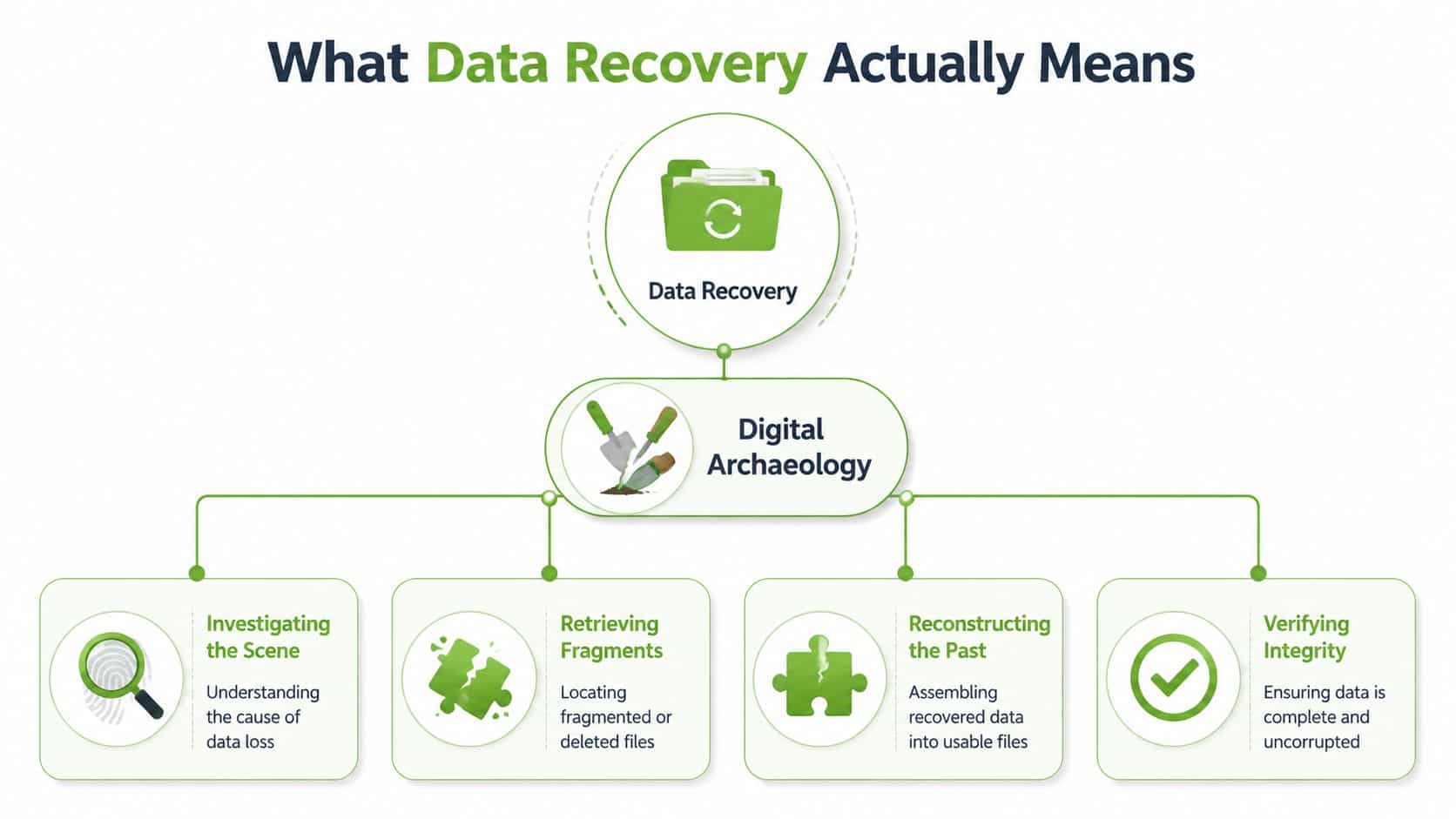
Computer repair is broader than many people expect. It is not just virus removal or replacing one broken part. It is the process of diagnosing what is wrong, fixing what can be repaired, and restoring the system so it works reliably again.
That can include hardware, software, performance, network issues, and user setup problems. In many cases, the repair is less about one dramatic failure and more about solving a chain of smaller issues that built up over time.
Common types of computer repair
A typical service call may involve one or more of these:
-
Diagnosing a computer that will not start
-
Speeding up a slow laptop or desktop
-
Replacing failing storage or memory
-
Fixing update errors and boot problems
-
Removing malware and cleaning up software issues
-
Troubleshooting printers, Wi-Fi, and shared devices
-
Helping with file access and basic data recovery when needed
This is why a good repair visit starts with triage. A technician needs to understand whether the problem is hardware, software, network related, or a mix of all three.
Repair and data recovery are related, but not the same
Data recovery still matters, but it is only one part of the bigger computer repair picture.
-
Repair means getting the computer and connected devices working properly again.
-
Recovery means trying to retrieve files that became inaccessible.
-
Setup and support means making sure the system stays stable after the fix.
Sometimes those overlap. A computer may need a new SSD, a Windows repair, and help restoring files from backup. In other cases, the main job is simply making the machine usable again.
Practical rule: If the computer is the tool that keeps your home or business running, the repair plan should focus on stability first and file recovery where needed.
What a technician is actually trying to learn
A proper triage process usually starts with questions like these:
-
What changed right before the problem started?
-
Does the computer power on and stay on?
-
Is the issue slow performance, boot failure, hardware damage, or device connectivity?
-
Are other devices involved, like printers, docking stations, or Wi-Fi?
-
Has anyone already tried updates, cleanup tools, or repair software?
Those answers help determine the safest and fastest repair path.
Common Computer Problems in East Edmonton Homes and Offices
In East Edmonton homes and small offices, the most common issues are usually practical ones. Systems get older. Storage wears out. Windows becomes cluttered. Updates fail. Malware gets in. Wi-Fi becomes unreliable. Devices that worked fine for years suddenly stop cooperating.
Slow computers and poor performance
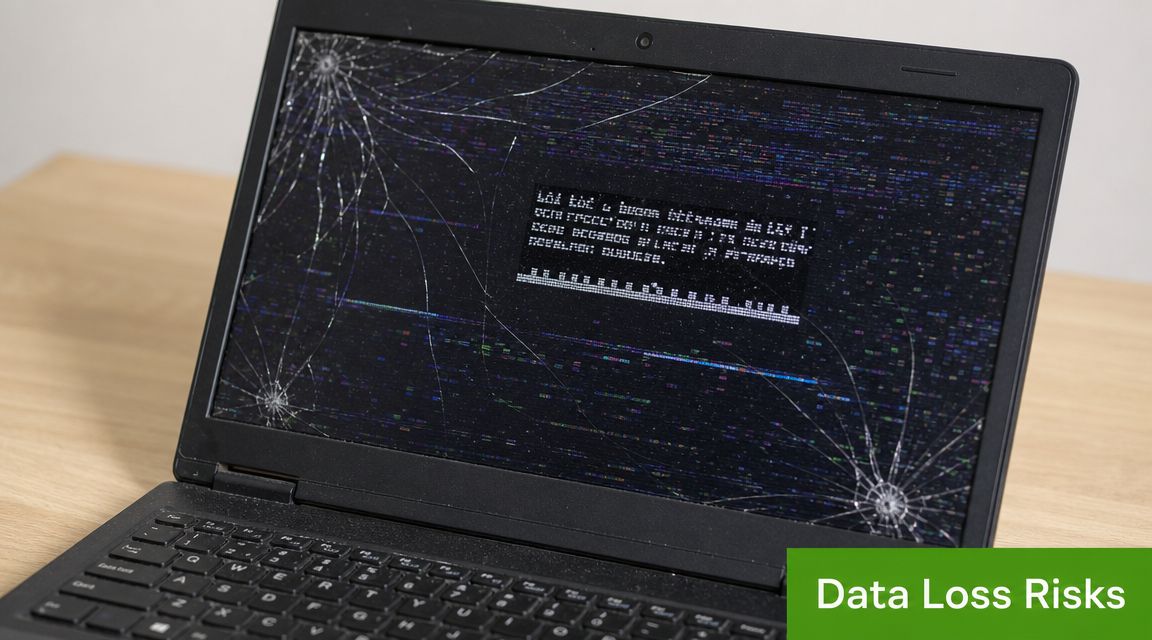
One of the most common repair requests is simple: "My computer is too slow." That can have several causes.
Older systems may still be using mechanical hard drives, limited RAM, or software that loads too many programs at startup. Background sync apps, browser extensions, heat buildup, and disk errors can also drag performance down.
Modern consumer SATA SSDs typically offer sequential read/write speeds of around 500 to 550 MB/s, whereas NVMe drives can exceed 3,000 MB/s. In contrast, a failing 5400 or 7200 RPM hard drive may slow to single-digit MB/s when bad sectors develop. That is why some computers feel much worse than ordinary age or clutter. They are struggling with storage failure, not just general slowness.
Startup and boot issues
Another major category is the computer that will not start properly. It may:
-
Freeze on the manufacturer logo
-
Show a blue screen
-
Loop into automatic repair
-
Power on with no display
-
Shut off unexpectedly during startup
These problems can point to storage issues, memory faults, update failures, overheating, motherboard trouble, or power supply problems. They need diagnosis before anyone starts reinstalling the operating system.
Hardware failures and physical damage
Not all repairs are software related. A lot of calls involve broken hardware:
-
Cracked laptop screens
-
Failing batteries
-
Loose charging ports
-
Overheating fans
-
Damaged keyboards
-
Hard drives or SSDs that are starting to fail
Solid-state drives fail differently from older mechanical drives. They usually do not make warning noises. Instead, the system may suddenly stop detecting the drive, become read-only, or fail during boot.
Virus, malware, and software problems
A computer can also seem broken when the real issue is software instability. Malware, unwanted programs, bad updates, profile corruption, and conflicting security tools can all cause crashes, pop-ups, login issues, and performance problems.
Not every "virus" problem is actually malware. Sometimes a badly aging computer just behaves erratically because storage, memory, or heat is causing system corruption.
Network, printer, and home office issues
A lot of repair calls are really environment problems. The computer may be fine, but:
-
The printer will not scan to the right folder
-
The Wi-Fi drops on one side of the house
-
A docking station will not detect monitors
-
A shared folder is no longer accessible
-
Cloud folders are not syncing because of account or network issues
That is one reason on-site service is so useful. The fix often depends on seeing how the computer interacts with everything around it.
The symptoms that matter most
When someone calls for computer repair east Edmonton, these symptoms are more useful than saying "it is broken":
| Symptom | What it may point to |
|---|---|
| Very slow startup and long delays opening folders | Aging or failing storage, low RAM, software overload |
| Computer powers on but shows no image | Display issue, graphics problem, RAM fault, or board-level issue |
| Repeated freezing during normal use | Heat, storage trouble, memory errors, or software corruption |
| Blue screens after updates or restarts | Driver conflict, storage issue, memory issue, or update failure |
| Printer, shared folder, or cloud access stops working | Network issue, sign-in issue, or permissions problem |
Safe First Aid Before You Book a Repair
If the computer is unstable, your first job is to reduce risk and avoid random fixes. A few careful checks can help clarify the issue without making it harder to repair.
Start with low-risk checks
Use this checklist before doing anything more aggressive:
-
Restart once, not repeatedly: One clean restart is reasonable. Endless restarts usually do not help.
-
Check cables, power adapters, and battery charge: Loose power connections cause more problems than people expect.
-
Disconnect unnecessary accessories: USB hubs, external drives, and docking stations can interfere with startup and device detection.
-
Note any error messages exactly: A photo of the screen can be more helpful than a memory of it.
-
Think about what changed: New software, an update, a spill, a drop, or a power outage all matter.
-
Test simple network basics: If the issue is printing, syncing, or shared folders, confirm whether Wi-Fi or internet access is also affected.
What not to do
This matters just as much as the checklist above.
-
Do not install random repair tools because a search result promised a fast fix.
-
Do not keep forcing a computer to boot if it freezes, clicks, or crashes during startup.
-
Do not open a laptop or desktop unless you know exactly what you are doing.
-
Do not reinstall Windows too quickly if the real issue may be failing hardware.
-
Do not ignore heat, smells, or physical damage.
If the system is making unusual noises, overheating badly, or showing signs of physical damage, stop there and get it assessed properly.
If the problem includes missing files
Sometimes a repair call also includes file loss, accidental deletion, or an external drive problem. For a practical walkthrough focused on deleted-file situations, this guide on how to recover deleted files is a useful starting point.
That kind of issue is different from a computer that is also crashing, failing to boot, or disconnecting its storage. In those cases, the repair and recovery steps need to be handled carefully together.
Protect the current state
If the machine still turns on and stays stable enough to check a few things, do these three things only:
-
Stop using it for anything unnecessary
-
Disconnect accessories you do not need for testing
-
Write down the symptoms and recent changes
That gives a technician a clearer picture and helps avoid accidental damage from trial-and-error fixes.
When to Call a Professional Right Away
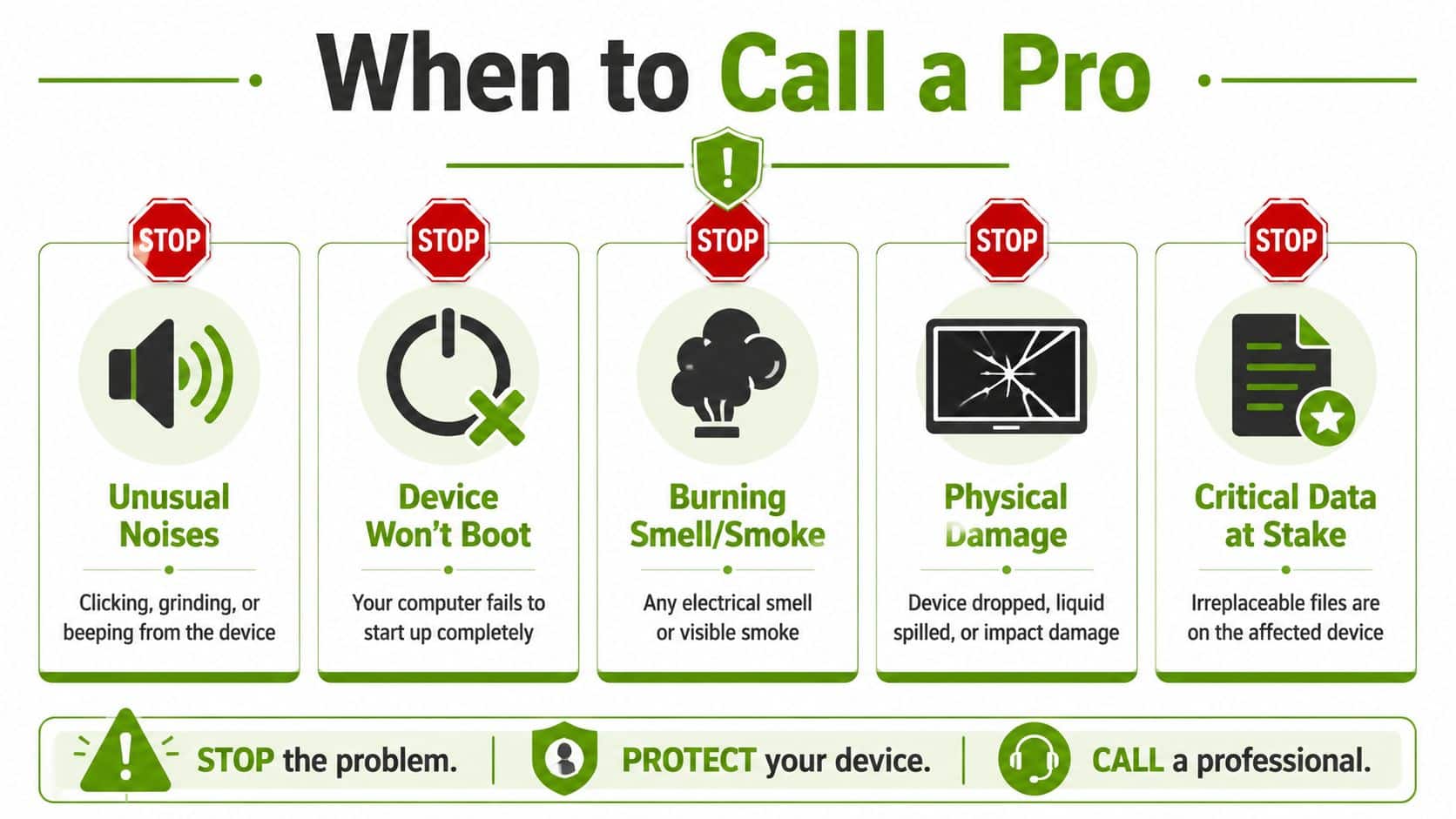
Some computer problems are routine. Others should not be pushed at home. When a machine shows signs of hardware failure, power trouble, overheating, or repeated boot failure, the safest move is often to stop experimenting.
Clear stop signs
Call a professional immediately if you notice any of these:
-
Clicking, grinding, or repeated spin-up sounds
-
The computer will not boot at all
-
The laptop overheats, shuts off, or smells hot
-
There is liquid damage, impact damage, smoke, or a burning smell
-
The system contains business-critical or irreplaceable files
Some repair problems are inconvenient. Others can become expensive very quickly if the wrong thing is tried first.
DIY versus professional repair
| Criteria | DIY First Aid | Professional Repair |
|---|---|---|
| Best use case | Basic checks, cable issues, simple restart, obvious settings problems | Unknown cause, hardware failure, boot issues, malware, ongoing instability |
| Risk level | Low if limited to simple checks | Lower when diagnosis is structured and targeted |
| Tools and diagnosis | Limited to what the user can safely access | Better testing for storage, memory, heat, power, and software issues |
| Speed to clarity | Often slow and uncertain | Usually faster to identify the real cause |
| Good fit for business systems | Rarely | Usually yes |
| Good fit after noises or physical damage | No | Yes |
Why on-site service makes sense
For many East Edmonton households and small businesses, the problem is not one disconnected device. It is the laptop, printer, Wi-Fi, email, cloud sync, and backup setup all interacting at once. On-site service allows the technician to troubleshoot the whole environment in context.
That is especially helpful when the next decision is whether to repair the machine, replace hardware, improve the network setup, or recover files from backup. If you are comparing local options for that kind of help, this page on data recovery near me gives a practical overview of what an on-site recovery-focused service can involve.
One more point that matters
Nerds 2 You Edmonton handles on-site computer repair and ongoing support for small and medium businesses, but it does not provide remote services. For many repair situations, that is actually a strength. An in-person visit allows the technician to inspect the computer, peripherals, local network, and backup devices directly instead of relying on screenshots and guesswork.
Choosing the Right Computer Repair Service in Edmonton
Not every computer repair company approaches service calls the same way. Some focus on basic shop intake and quick hardware swaps. Others are built around on-site diagnosis, troubleshooting, and practical support for the full home or office setup.
That difference matters because good repair is not only about technical skill. It is also about process, transparency, communication, and judgment.
What to ask before booking
Start with practical questions, not marketing language.
-
Do you offer on-site service? That matters when the issue includes printers, Wi-Fi, docking stations, or multiple devices.
-
How do you charge? Ask whether the provider uses hourly billing, flat fees, or a separate diagnostic charge.
-
Do you handle Macs and PCs? Mixed-device homes and offices are common.
-
Do you diagnose before recommending replacement? You want a clear repair path, not a rushed guess.
-
How is privacy handled? A good answer should cover confidentiality and careful handling of personal or business information.
Why trust and convenience matter more now
The broader industry context helps explain why this choice deserves care. According to IBISWorld's Canada industry overview, the Canadian electronic and computer repair services industry is a contracting market, with revenue declining at an annualized rate of 1.3% to C$1.8 billion in 2025. In that kind of environment, providers do not stand out because repair is rare. They stand out because they are responsive, clear, and trustworthy when customers need help.
Signs of a good fit
A strong local provider usually does a few things well:
| What to look for | Why it matters |
|---|---|
| Clear explanation of next steps | You need to know whether the plan is diagnosis, repair, replacement, or backup restoration |
| On-site availability | Helpful when the issue involves more than one device or a home office setup |
| Comfort with hardware and network troubleshooting | Many repair calls overlap with Wi-Fi, printers, storage, or software issues |
| Respect for business continuity | Small firms need practical support, not generic consumer advice |
| Straight answers about uncertainty | Honest technicians will not promise a result before diagnosis |
Good technicians do not sell panic. They reduce confusion, explain trade-offs, and focus on the least disruptive solution.
Red flags to avoid
Be cautious if a service leads with vague promises, rushes straight to reinstalling the operating system, or cannot explain how it will diagnose the cause before making changes. The wrong workflow can waste time, money, and sometimes data.
For East Edmonton residents, convenience also matters more than many providers admit. If the machine is part of a working household or small office, unplugging everything and driving across the city can create a second problem. A service that can assess the system where it lives often gives a clearer answer faster.
How to Prevent Common Computer Repair Problems
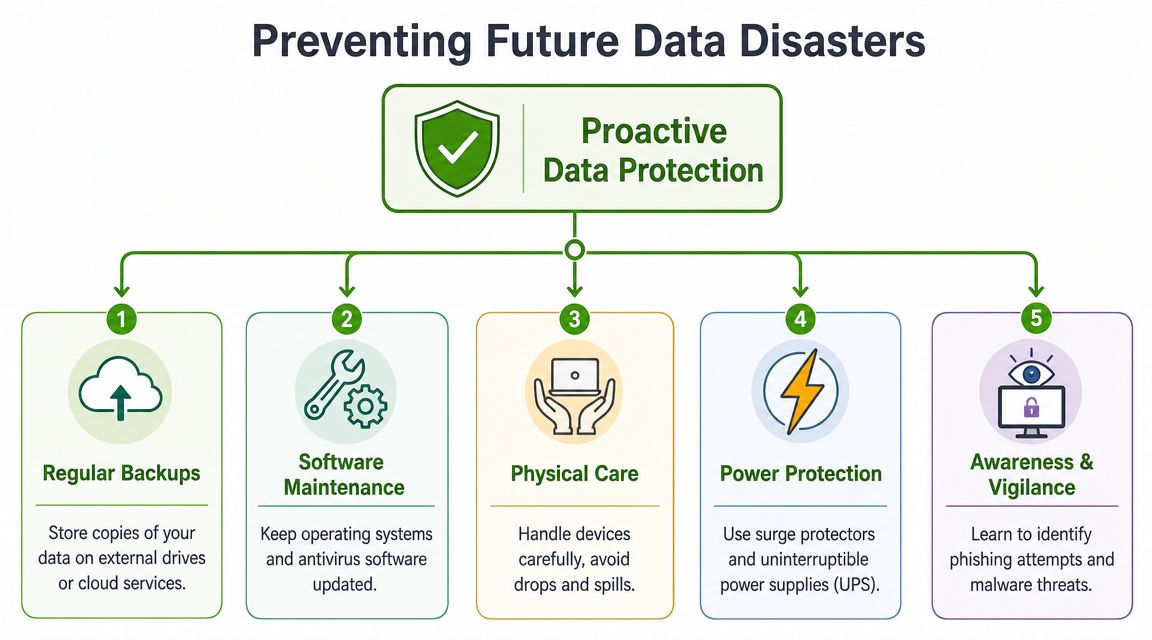
The best repair call is the one you never need to make. Prevention is rarely exciting, but it is far cheaper and less stressful than dealing with avoidable failures.
Keep your hardware and software in good shape
A few habits prevent a lot of common issues:
-
Replace aging hard drives before they fail
-
Keep laptops clean and well ventilated
-
Install updates carefully and let them finish properly
-
Use surge protection
-
Avoid cheap chargers and damaged cables
-
Watch for signs of battery swelling, heat, or fan noise
Back up important data anyway
Even in an article focused on repair, backups still matter. The 3-2-1 backup rule remains the most practical guideline:
-
Keep three copies of important data
-
Use two different types of storage
-
Keep one copy off-site
For a home user, that may mean the working copy on the computer, a backup on an external drive, and another copy in a cloud service. For a small business, it may include a local backup plus cloud protection for shared folders and documents.
-
Use an external drive for scheduled backups: If you are choosing hardware, this guide to the best external hard drive for backup can help you think through capacity and reliability.
-
Keep cloud sync organised: Know which folders are protected and which are only stored locally.
-
Test restores occasionally: A backup that has never been checked is just a theory.
Do not ignore your network
Home computer repair increasingly overlaps with network reliability. Weak Wi-Fi can interrupt cloud backups, printer access, file transfers, video calls, and shared device connections. In crowded 2.4 GHz environments, overlapping channels can cause instability. Moving key devices to 5 GHz can improve reliability in many homes.
That matters for home offices and small teams. If the network is unstable, the computer may look like the problem when the real issue is the environment around it.
A reliable computer setup depends on more than the computer itself. The network, peripherals, and backup routine all matter.
A few habits that prevent expensive trouble
Some prevention steps are simple:
-
Keep drinks away from laptops
-
Shut systems down properly during updates
-
Be cautious with phishing emails and fake invoice attachments
-
Retire old failing external drives instead of using them one more time
If you want a broader non-technical read on planning for interruption and recovery, these Lotrasoft IT resilience insights are a useful companion to the practical backup steps above. The main point is straightforward. Resilience comes from preparation, not optimism.
East Edmonton Computer Repair FAQs
A few questions come up on almost every service call. Here are the short, practical answers.
| Question | Answer |
|---|---|
| What kinds of computers can be repaired on-site? | Many issues involving laptops, desktops, printers, Wi-Fi, storage devices, and small office setups can be assessed on-site. |
| Can a slow computer usually be fixed? | Often, yes. Slowness is commonly caused by aging storage, low memory, overheating, software clutter, or malware. |
| Should I keep restarting a computer that will not boot properly? | Usually no. Repeated restarts can make some hardware and storage issues worse. |
| Is every boot problem caused by Windows? | No. Startup failures can also come from storage, RAM, power, heat, or motherboard problems. |
| Can a technician help with printer and network problems too? | Yes, especially during on-site visits where the full setup can be checked together. |
| Do I need to bring the computer to a shop? | Not always. For many East Edmonton calls, on-site diagnosis is more useful because the issue involves the environment around the computer too. |
| What if the issue includes missing files? | That can often be assessed during the same visit, but the safest approach depends on whether the problem is simple deletion, corruption, or failing hardware. |
| Are my files and information kept confidential during service? | They should be. Ask the provider directly how privacy and sensitive business or personal data are handled. |
| Can Wi-Fi problems look like computer problems? | Yes. Cloud folders, shared drives, printers, and backups can all fail or appear inconsistent when the network is unstable. |
| What is the safest first step if I am not sure what is wrong? | Stop using the affected system for anything unnecessary, avoid random repair tools, and document the symptoms before calling for help. |
If you are dealing with a slow PC, a laptop that will not start, printer and Wi-Fi issues, failing hardware, or a computer that just is not working the way it should, the safest next step is to get a clear diagnosis before trying more fixes. Nerds 2 You Edmonton provides on-site computer repair and data recovery guidance for homes and small businesses across Edmonton, including East Edmonton, with support for PCs, Macs, storage issues, backups, and local network problems.
Contact Nerds 2 You for quality professional service
Experience the difference with our dedicated team of experts ready to assist you. Whether you need immediate support or have questions about our services, we are here to help. Reach out today and let us provide you with the reliable service you deserve. Your satisfaction is our priority and we guarantee a prompt response to all inquiries.
Discover more from Nerds 2 You
Subscribe to get the latest posts sent to your email.