
You've probably got the Onn remote in one hand, the TV's original remote in the other, and a small pile of batteries on the coffee table. The box promised one remote for everything. Instead, the telly won't respond, Roku only half-works, and every guide online seems to skip the part you're stuck on.
That's a common spot to land in with an Onn universal remote. The good news is that most problems come down to a few simple things: the wrong setup method, bad timing during code search, weak batteries, or one hidden reset step that many guides leave out. Once you know where those trouble spots are, the whole process gets a lot less maddening.
Table of Contents
- Getting Started with Your Onn Universal Remote
- The Pre-Programming Checklist What to Do First
- Manual Code Entry for Precise Control
- Using Auto-Code Search When Codes Fail
- Fixing Common Onn Remote Problems
- When Your Tech Needs On-Site Help in Edmonton
Getting Started with Your Onn Universal Remote
You get home, sit down to watch TV, and reach for the new Onn universal remote so you can finally retire the pile of remotes on the coffee table. Then the first setup attempt does nothing useful. The TV stays on the wrong input, the streaming box ignores you, and it starts to feel like the remote is the problem.
Usually, it is not that simple.
An Onn universal remote is really a translator. It has to send the right signal, in the right format, at the right time, to the right device. If any one of those pieces is off, setup can stall even when the remote and the TV are both perfectly fine. That is why a failed first try does not automatically mean you have the wrong remote or the wrong code.
Some Onn models do give you a head start. Many are designed to work more easily with common setups such as Samsung TVs and Roku devices, so there is a decent chance your living room gear is already within range of what the remote can handle. The part that trips people up is the process. A button press held a second too long, weak batteries, or missing the final save step can break setup before you ever get to normal use.
That is the key idea for the rest of this guide. We are not just listing codes. We are looking at why pairing fails, so you can fix the actual cause instead of repeating the same steps and hoping for a different result.
If your remote trouble is part of a bigger living room mess, such as a TV, soundbar, streaming box, and smart devices all competing for attention, it can help to look at the whole setup instead of one gadget at a time. That is where smart home support in Edmonton for connected home setups can be useful. Nerds 2 You can help with the broader home tech side, but this guide stays focused on what you can do yourself with the Onn remote first.
The Pre-Programming Checklist What to Do First
You sit down to program the remote, follow the steps carefully, and nothing happens. In a lot of homes, the problem starts before the first code ever goes in.
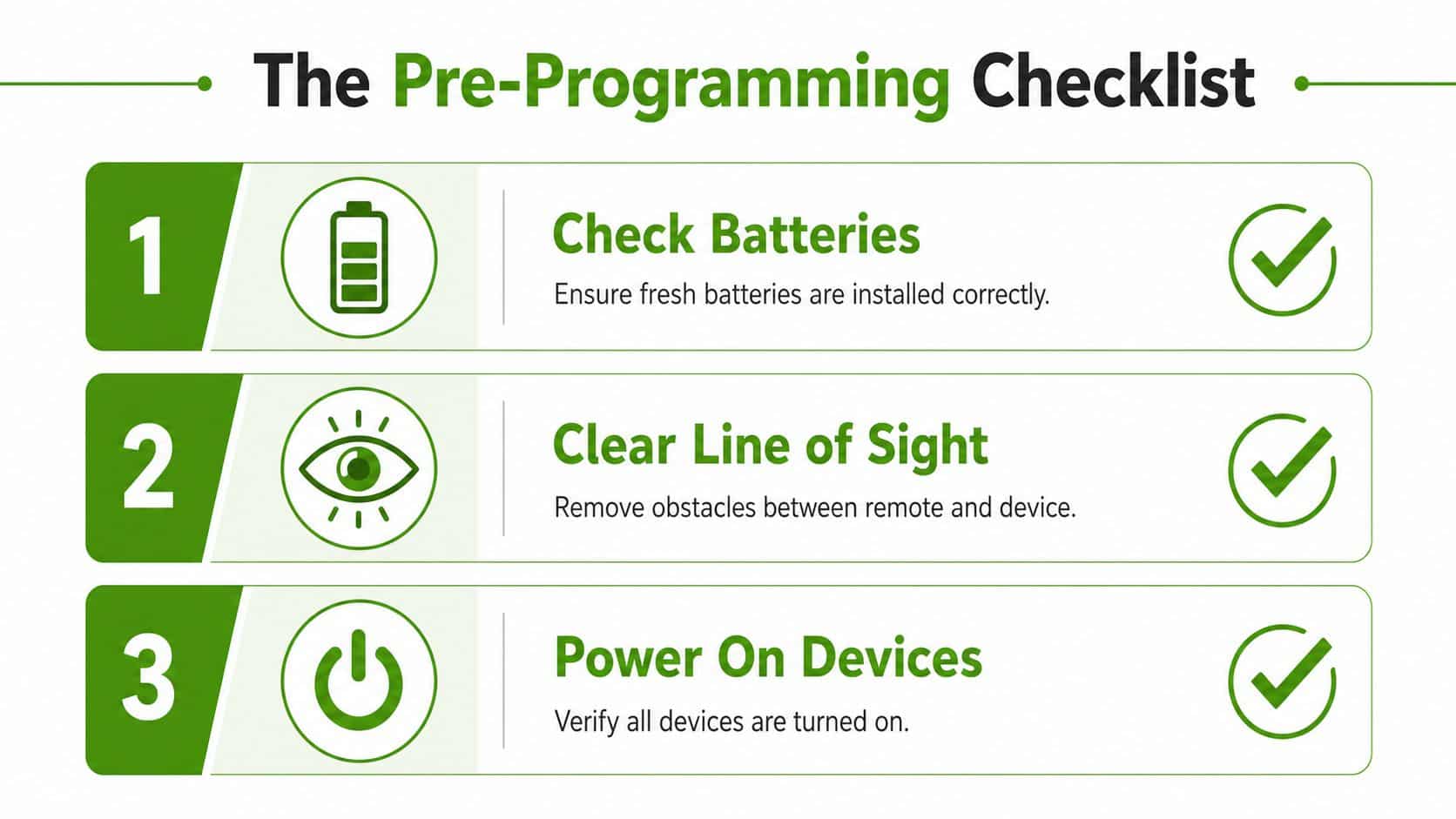
A universal remote works a bit like a key. If the battery power is weak, the signal is blocked, or the device is only half awake, even the right key will not turn the lock. That is why this quick check saves time. It helps you rule out the common setup killers first.
Start with the batteries
Fresh batteries matter more than people expect. Remote programming can fail in a confusing way when the batteries are weak. The light may still come on, but the signal can be too inconsistent to finish setup properly.
Use a new matching pair of alkaline batteries if you can. Avoid mixing an old battery with a new one, and avoid using whatever loose pair has been rolling around in a drawer. Battery type and battery condition both affect how strongly the remote sends its signal.
If the remote feels random, start here.
Check the path between the remote and the device
Many Onn universal remotes use infrared, which means the remote needs a clear view of the device's sensor. That sensor is usually on the front of the TV or streaming box. If a soundbar, picture frame, shelf edge, or even a low coffee-table angle is in the way, the remote can seem dead even when it is working normally.
A good test is to stand a few feet away and point straight at the device. During setup, keep the path as clear as possible.
Make sure the device is fully on
This one trips up a lot of people. A TV in standby, a streaming box in sleep mode, or a device that is still waking up may ignore setup commands. Then it looks like the code failed, when the underlying issue is timing.
Check for a full power-on state before each attempt:
- TV or device is on the home screen or a live input
- Screen is fully awake, not black or dimmed
- You can confirm the device is responding to its original remote, if you still have it
- You are programming one device at a time
That last point matters. If you try to sort out the TV, soundbar, and streaming box all at once, it gets hard to tell which device is responding and which one is not.
Keep the setup environment boring
Boring is good here. Close curtains if bright sunlight is hitting the TV sensor. Stand still for the first attempt. Do not test from across the room. Give each button press a steady, deliberate tap instead of rushing.
A lot of failed programming attempts come down to timing. Holding a button too long, releasing too early, or testing from a poor angle can interrupt the process without giving you a clear error message. That is why a calm, controlled first attempt usually works better than repeating the same steps faster.
If you do all of this and the remote still will not behave, the issue may be bigger than programming alone. In Edmonton, Nerds 2 You can help with broader home tech problems such as TV setup confusion, device conflicts, or a living room system with too many pieces in the chain. They are not a substitute for the remote manual or manufacturer code list, but they can help when the problem turns out to be the whole setup, not just the remote.
Manual Code Entry for Precise Control
Manual code entry works best when you want a clear yes-or-no result. You enter a brand code, the remote accepts it or rejects it, and you can test right away. That makes it easier to troubleshoot than guessing through a long search process.
A good way to look at it is this. Manual entry is like using the exact postal code instead of driving around the block hoping to spot the right house. If the code matches your TV, soundbar, or streamer, the remote usually responds quickly and predictably.
The basic flow is simple:
- Turn on the device you want to control.
- Press and hold Setup until the indicator light is ready.
- Press the device button such as TV, Audio, or Stream.
- Enter the code for your brand.
- Test more than one button right away, including power, volume, input, and menu controls if available.
That last step matters more than people expect.
A remote can sometimes accept a code that only partly matches the device. Power might work, but volume fails. Menu buttons might respond, but input selection does nothing. That usually means the code is close, not correct. Try the next code listed for that brand instead of repeating the same one.
Why manual entry fails even when the code looks right
This is the part many code lists skip.
A failed attempt does not always mean you found the wrong brand code. Sometimes the code is fine, but the entry process gets interrupted. The most common reasons are simple: a weak battery drops the remote signal during setup, a button press is too long or too quick, or the remote is pointed a little off-axis while you test the result.
Battery type can matter too. Fresh alkaline batteries usually give steadier performance during programming than old mixed batteries pulled from a drawer. If one battery is new and the other is half-dead, the remote may still light up but send an inconsistent signal. That is frustrating because it looks like a code problem when it is really a power problem.
Quick reference examples
If you already have a short code list from your paperwork or packaging, start there. Enter one code at a time and test fully before moving on.
| Brand | Device Type | Try these first |
|---|---|---|
| Samsung | TV | Brand-specific codes from your Onn paperwork |
| Roku | Streaming device or Roku TV | Roku codes listed for your exact Onn remote model |
The reason I am keeping that table general is simple. Onn remotes vary by model, and code length can change between remotes. A 4-digit code on one model may be a 5-digit code on another. Matching the code list to the exact remote model saves a lot of wasted effort.
Remotes without number buttons
This trips up plenty of people.
Some Onn remotes do not have a standard number pad, but they can still accept codes. The number entry is handled through mapped buttons. If your remote came with a small legend or setup sheet, use that exact mapping for your model and enter the code slowly, one digit at a time.
If the mapping feels awkward, that is normal. The first attempt often feels like entering a Wi-Fi password on a TV screen. Slow and deliberate works better than fast.
Here is the practical part people miss:
- Write the code down before you start
- Say each digit to yourself as you press it
- Pause only briefly between digits
- Test several functions after the light confirms the code
If you lose your place halfway through, start over cleanly. Random extra button presses can put the remote into the wrong state, and then it looks like the code failed when the sequence was the problem.
How to know when it is more than a remote issue
If you have tried the right model-specific codes, used fresh batteries, and tested at close range, but the device still behaves oddly, the problem may sit outside the remote itself. I see this in Edmonton homes with soundbars, streaming sticks, HDMI-CEC settings, or TVs that have been reset and now respond differently than before.
That is where local help can save time. Nerds 2 You can help with broader home tech setup issues, such as figuring out why the TV, soundbar, and streaming box are fighting each other, or why the remote seems inconsistent across devices. They are not the manufacturer, and they do not replace the official code list for your exact Onn remote, but they can sort out the larger setup when the remote is only one part of the problem.
Using Auto-Code Search When Codes Fail
You try the listed codes, the light blinks, and the TV still sits there like nothing happened. That is usually the moment to switch to auto-code search.
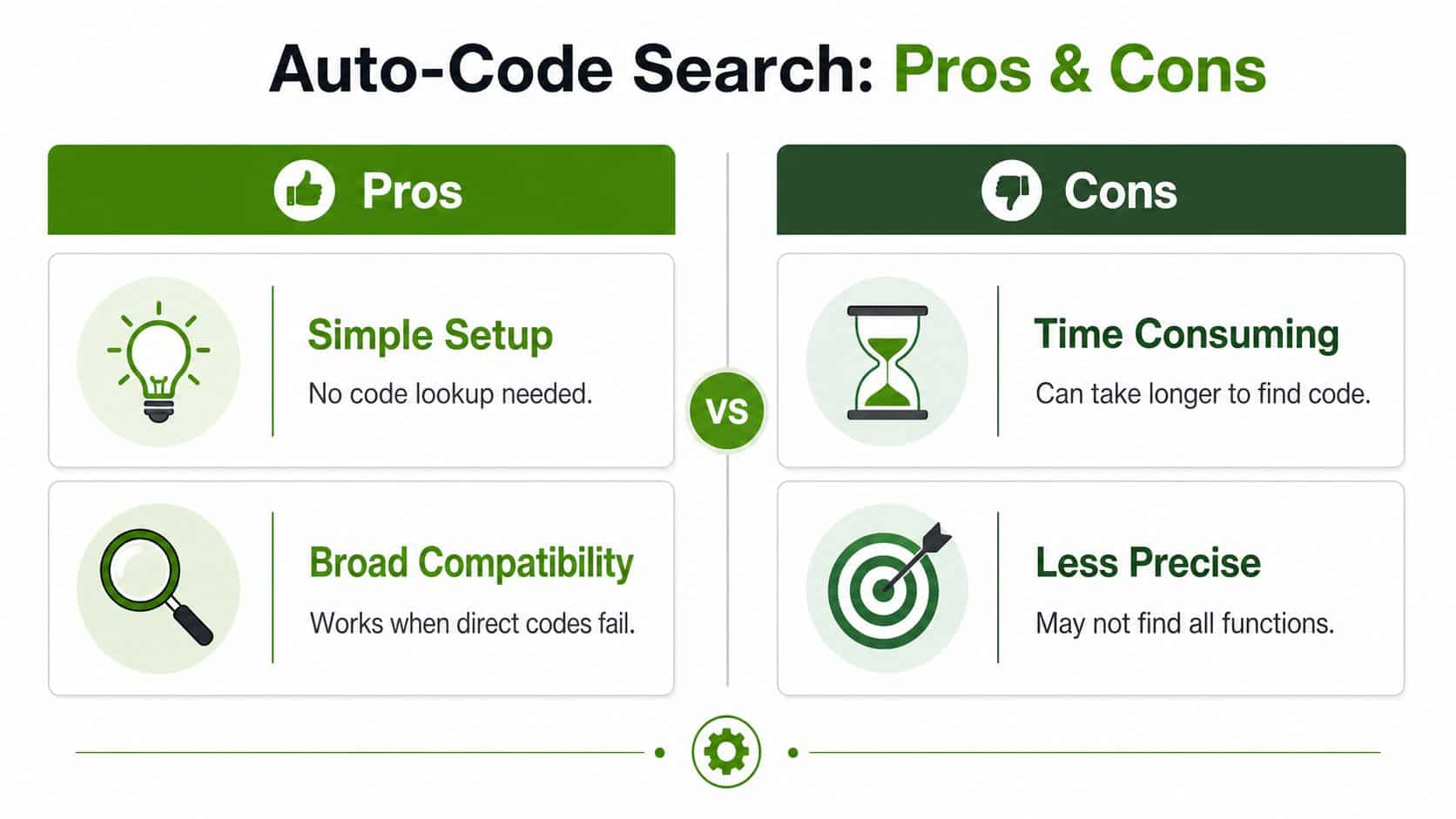
Auto search works a bit like scanning radio stations. The remote moves through stored code sets until it finds one your TV, soundbar, or streaming device recognizes. That makes it useful when the paper code list is missing, the listed code does not match your exact model, or the device brand has changed hands over the years and uses more than one code family.
Manual entry versus auto search
Manual code entry is still the cleaner method when you have a confirmed code. Auto search is the backup plan when that direct route does not get results.
| Method | Best use | Main strength | Main weakness |
|---|---|---|---|
| Manual code entry | You have known brand codes | More precise | Needs the right code |
| Auto-code search | Known codes failed | No code lookup needed | Easy to miss the right moment |
The part that trips people up is not usually the remote. It is the pace. Auto search asks you to watch the device closely and react at the right time when it turns off or changes state. If you hesitate, or if you keep holding a button after the device responds, the remote can move past the correct code and keep searching. Then it looks like the method failed, even though it briefly found a match.
How to make auto search work better
Set yourself up first. Turn the device on, point the remote straight at it, and reduce distractions in the room if you can. This is one of those small tech jobs where a calm 60 seconds beats five rushed attempts.
A practical approach:
- Use auto search only after manual codes fail
- Watch the device, not the remote light
- Stop as soon as the TV or device reacts
- Repeat once if you think you missed the shutoff moment
- Test more than power after it saves
That last point matters. A found code may turn the TV off but still give you awkward volume or input control. Auto search often finds a code that is close enough before it finds one that is fully compatible.
If that happens, run the search again and try for a better match. It is a bit like trying on reading glasses from the drugstore. The first pair may help, but the next one may fit much better.
One more practical note from many living room setups I see around Edmonton. Auto search can get messy when the remote is not the only thing affecting the TV. HDMI-CEC, soundbars, and streaming boxes can make it look like the wrong device responded. If the setup feels confusing beyond the remote itself, Nerds 2 You explains what they can and cannot help with in their home tech support FAQ for Edmonton customers. They can sort out broader device setup issues, but they do not replace the official Onn instructions for your specific remote model.
Fixing Common Onn Remote Problems
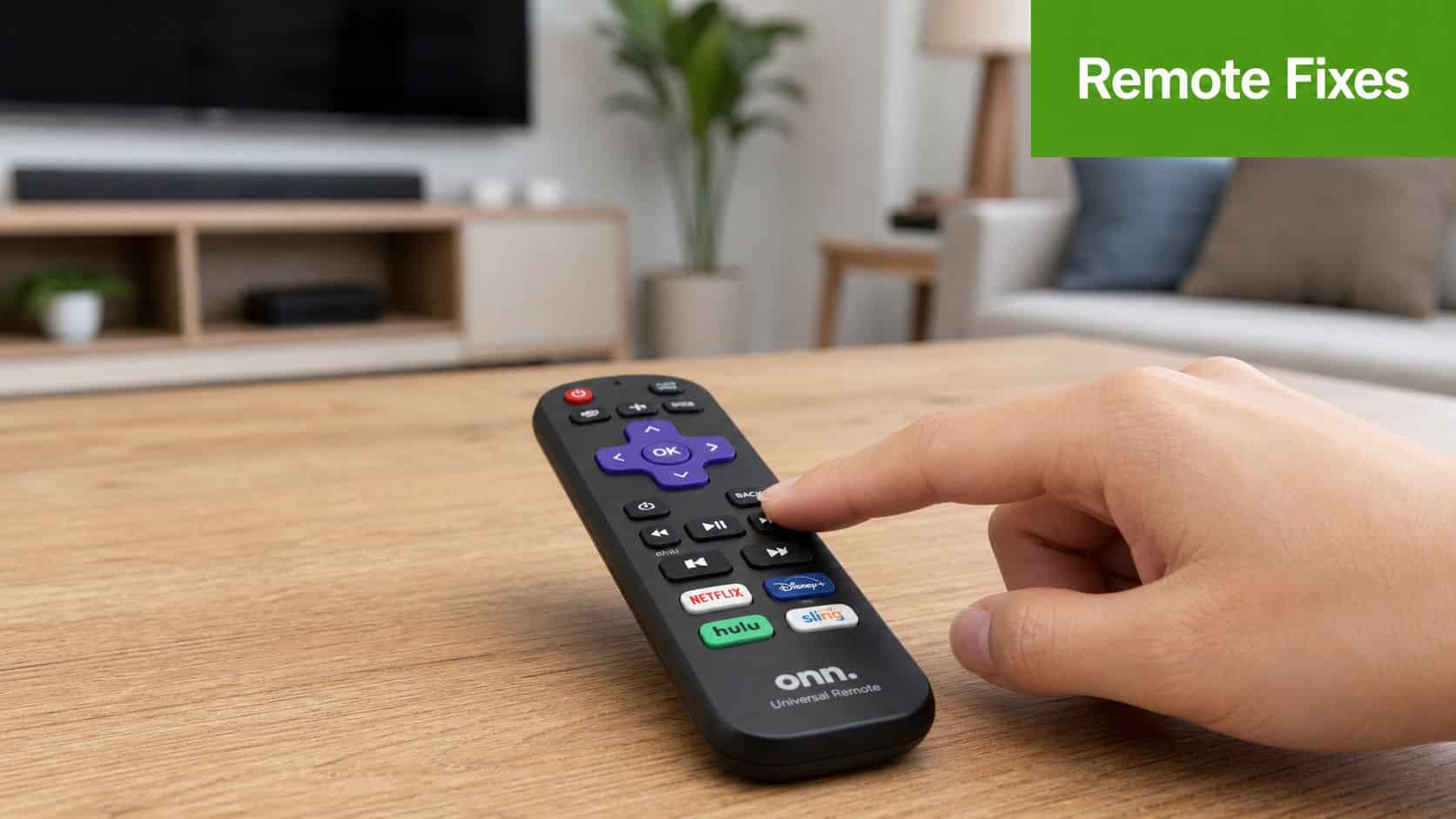
You sit down to watch TV, press the button, and the Onn universal remote blinks back at you like it is listening. The TV does nothing. That usually points to a simple problem in the chain between button press and signal, not a mystery failure.
When the remote stops responding entirely
Start with power before you assume the remote is damaged. Universal remotes can become picky when the batteries are weak, and mixed battery brands or old rechargeable cells often cause odd behaviour. The light may still blink even when the remote no longer has enough steady power to send a strong infrared signal.
A quick battery check helps more than people expect:
- Replace both batteries with a fresh matching pair
- Make sure the batteries are inserted in the correct direction
- Clean the battery contacts if you see dust or white residue
- Stand directly in front of the TV or device and try again
If that does not help, reset the remote and clear out any half-finished programming. The process many owners use is shown in this Onn remote reset walkthrough: remove the batteries, press OK for 2 seconds, hold 2 and 8 for about 6 seconds until the LED blinks twice, then enter 981.
A reset is useful when the remote blinks but never controls the device, or when several programming attempts have left it in a confused state. It works a bit like restarting a frozen computer. You are not fixing every possible issue, but you are clearing out stuck settings so you can test again from a clean starting point.
When learning or macros will not behave
Learning features are handy, but they are also the fussiest part of many universal remotes. If one button refuses to copy from the original remote, the usual cause is timing or positioning, not a bad remote.
Keep the two remotes close together, with the front ends lined up carefully. A small angle change can make the signal miss, the same way a flashlight beam misses the keyhole if your hand shifts a little. Press and hold buttons steadily. Rushing this step often causes the Onn remote to capture only part of the signal.
Power state matters too. If you are trying to build a macro, make sure the device is fully on, not just sitting in standby. Standby can fool you because the screen looks off in both cases, but the device may respond differently to commands.
If one learned button fails, test another before giving up. That helps you tell the difference between a single bad recording and a broader setup problem.
For bigger home tech issues around the remote, TV, streaming box, or network, Nerds 2 You is clear about what they do and do not cover in their Edmonton on-site support FAQ. They can help with in-person tech problems in the home or office, but they do not replace the official Onn instructions for your exact remote model.
When Your Tech Needs On-Site Help in Edmonton
Some tech problems stop being a remote problem. A TV won't connect to Wi-Fi, the streaming box keeps dropping off the network, the laptop controlling the smart home setup is acting up, or the whole office network needs attention.
It's important to be clear about service scope. Nerds 2 You does not provide remote services. Their FAQ states that support and repairs are handled on-site at the client's home or office, which you can verify on their FAQ about on-site support and service limits. That matters if you were hoping someone could log in remotely and program a universal remote for you. That's not their model.
It's also worth being transparent about the business side. Nerds 2 You doesn't provide full MSP services but does provide ongoing support and network monitoring for small and medium businesses. For the types of issues that benefit from in-person help, that on-site approach can be the better fit. If you want a clearer picture of what that includes, their page on what on-site computer repair includes in Edmonton lays it out in plain language.
If your Onn universal remote is only one part of a bigger tech headache, Nerds 2 You Edmonton can help with the on-site problems that a DIY guide can't fix, from computer repair and Wi-Fi issues to smart home setup and small business support.
Contact Nerds 2 You for quality professional service
Experience the difference with our dedicated team of experts ready to assist you. Whether you need immediate support or have questions about our services, we are here to help. Reach out today and let us provide you with the reliable service you deserve. Your satisfaction is our priority and we guarantee a prompt response to all inquiries.
Discover more from Nerds 2 You
Subscribe to get the latest posts sent to your email.