
Your cursor freezes in the middle of an email, the touchpad still clicks but the pointer won't move, and the next meeting is already waiting. That's the moment you might assume the laptop is dying, but in practice the fault is often much simpler, a disabled setting, a hotkey toggle, a driver problem, or a firmware switch that got flipped without warning. A careful triage path saves time, and it usually avoids unnecessary parts replacement.
Table of Contents
Why Your Touchpad Suddenly Stops Working
A reader usually notices the problem in the middle of a normal task, not during a repair session. One minute the laptop is fine, the next the pointer stops responding after a Windows update, after a hurried restart, or after someone brushes the wrong function key while packing the machine into a bag. That pattern matters because it often points to a reversible settings issue rather than a dead touchpad.
The first question is whether it failed or got disabled
In Edmonton service calls, the most common surprise is that the touchpad isn't broken at all. It's been turned off by software, by a keyboard shortcut, or by a firmware setting that hides in BIOS or UEFI, which is why the symptom can look like hardware failure even when the laptop itself is healthy. The same is true when Windows updates reset device settings or when accessibility options change the way the pointer behaves.
Practical rule: if the touchpad stopped suddenly and there was no spill, no crack, and no drop, assume disabled first, failed second.
There are still physical causes, and they matter. A loose ribbon cable under the palm rest can make the pad work one moment and vanish the next, and a worn or damaged module can leave you with clicking but no movement. But that's not where a sensible diagnosis starts, because most users can check the reversible causes in minutes.
What the symptoms usually mean
A completely dead pad often points to a disabled device, a corrupted driver, or a firmware toggle. A pad that clicks but doesn't track can point to a hardware connection issue or internal wear. Intermittent response when you press the palm rest is a stronger hint that something inside the chassis is loose.
The practical takeaway is simple. Start with the easy control layers, then move to driver work, then to firmware, and only then treat the touchpad as a physical repair candidate. That sequence is why experienced techs often solve the issue without opening the laptop on the first visit.
Quick Settings and Keyboard Toggle Checks
The fastest fixes live in the operating system itself. On Windows 10, touchpad controls are usually under Settings > Devices > Touchpad, while Windows 11 moved the path to Settings > Bluetooth & devices > Touchpad and the touchpad needs to be toggled On there, which is exactly where a lot of upgrade-related confusion starts (Windows 10 and 11 touchpad path differences). If the pad is off in Settings, no driver reinstall will help until that switch is corrected.
Check the function key before anything else
Many laptops also have a hardware shortcut that disables the touchpad without a warning banner. Lenovo, HP, Dell, and ASUS each use their own function-key combinations, and the key often carries a small touchpad icon, sometimes with a slash through it. Guessing wastes time, so it's smarter to look at the top row keys first, especially after travel or cleaning.
| Brand | Typical Fn Combo | Icon on Key |
|---|---|---|
| Lenovo | Fn plus the touchpad function key | Touchpad symbol |
| HP | Fn plus the touchpad function key | Touchpad with line or slash |
| Dell | Fn plus the touchpad function key | Touchpad icon |
| ASUS | Fn plus the touchpad function key | Touchpad icon |
Some laptops treat the touchpad key like a mute button for the pointer. Press it once, and the pad disappears until you press it again.
Mac users need a different path. The equivalent check lives in Accessibility > Pointer Control > Trackpad & Mouse, where software settings can change how the trackpad behaves. That's not the same as a Windows driver problem, so it helps to keep the platform separate in your head from the start.
A fast home checklist
-
Confirm the touchpad toggle is On: Check the system settings path that matches your Windows version.
-
Try the Fn shortcut once: If the pad was disabled by accident, this often restores it immediately.
-
Test with an external mouse unplugged: Some laptops shift pointer behaviour when another device is active.
-
Watch for a small on-screen icon: A brief pointer-disable icon can confirm the laptop received the hotkey.
If those checks fail, don't keep pressing random keys. At that point, the issue has likely moved beyond a simple accidental toggle and into driver or firmware territory.
Updating or Reinstalling the Touchpad Driver
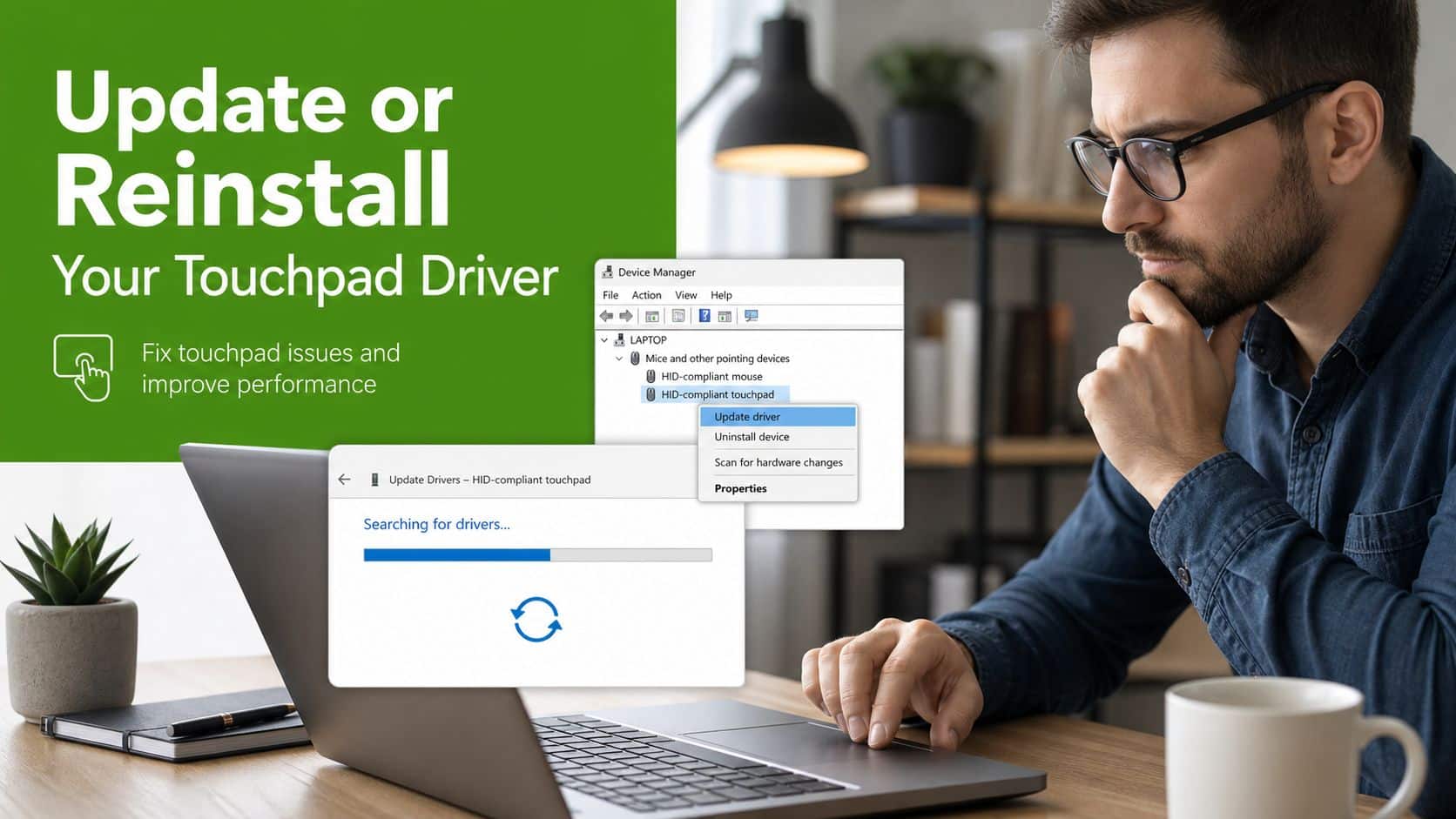
Once the system settings look correct, the next place to check is Device Manager. Open it with Win + X, then look under Mice and other pointing devices or Human Interface Devices for the touchpad entry, which may appear as HID-compliant touchpad or under a vendor name (Windows Device Manager repair path). If the device has a yellow warning triangle, that's a strong sign that Windows sees the hardware but doesn't like the current driver state.
Update first, then reinstall if needed
A driver update is the least disruptive move. Right-click the touchpad entry and choose Update driver if Windows can fetch a better version. If the device keeps failing or disappears after a reboot, uninstalling it forces Windows to rebuild the registration on the next startup, which often clears a stubborn ghost-disable state.
If you go the uninstall route, use the option to delete the driver software when it's offered. That gives Windows a cleaner reinstall than a shallow removal does. It's especially useful when the touchpad worked yesterday and vanished after an update or sudden shutdown.
MacBooks take a different route
Apple doesn't use the same manual driver process as Windows laptops. On a MacBook, the practical path is System Settings > Software Update, because the touchpad issue is more often handled through system software maintenance than through a separate driver package. If the touchpad still fails after software updates, the next layer is usually hardware or a deeper system reset rather than a Device Manager-style repair.
A useful distinction here is simple. If Device Manager shows the touchpad but it won't behave, the driver is a good suspect. If Device Manager shows nothing at all, or the entry comes and goes, you may be dealing with a deeper controller or firmware issue.
For a fuller driver checklist, see this local driver update guide. It's the right next read when Windows recognises the device but won't keep it stable.
Firmware, BIOS, and Brand-Specific Recovery Paths
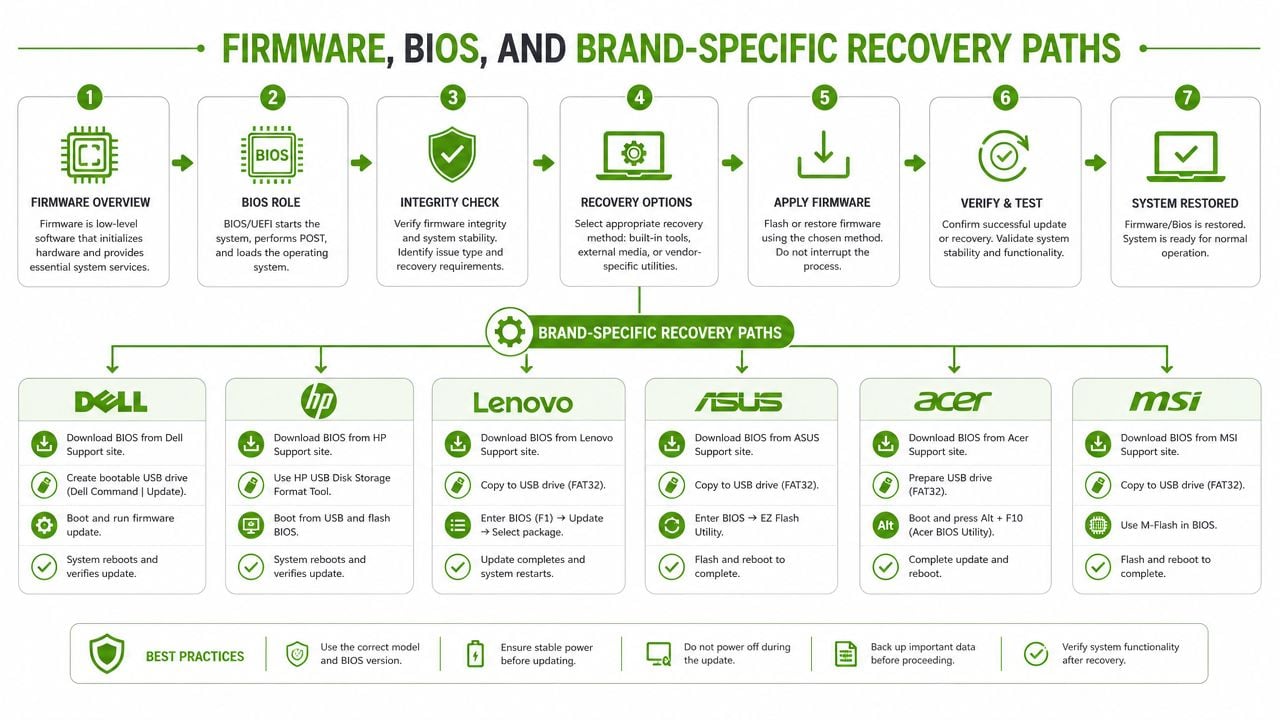
Some touchpads look dead because the firmware has turned them off. Enter the laptop's setup screen with F2, Del, or the brand's equivalent boot-time key, then look for Internal Pointing Device, Touchpad, or Trackpad under an Advanced-type menu and re-enable it if it's disabled (BIOS-level touchpad enablement). That setting can mimic a hardware failure so closely that users often skip right past it.
ASUS is a good example of a two-driver fix
ASUS documents a recovery path that depends on both the Intel I2C chipset driver and the ASUS Precision Touchpad driver working together, and it also notes the uninstall option that includes Delete the driver software for this device before restarting (ASUS recovery path). That's a reminder that some laptops don't fail because of one bad touchpad driver. They fail because the controller driver and the touchpad driver are both part of the chain.
MacBooks handle this layer differently. Apple routes many of the same complaints through macOS updates and system resets rather than a BIOS menu, so the workflow is not interchangeable with Windows. For teams that want a broader planning example around operating system changes, how OnRoute handles OS upgrades is a useful operational reference for thinking about controlled change.
What this layer tells you
If the touchpad comes back after a BIOS toggle or after controller-driver work, the hardware was probably fine all along. If it still doesn't respond after those checks, the odds shift toward a physical part issue or a board-level fault. That's the point where blind software troubleshooting starts wasting time.
For entering setup on newer systems, this BIOS access guide for Windows 11 is helpful when the boot screen timing is giving you trouble. The key detail is not the menu itself, it's confirming whether the laptop has disabled the internal pointing device before you assume the pad is dead.
Hardware Checks for Physical Damage and Cable Issues
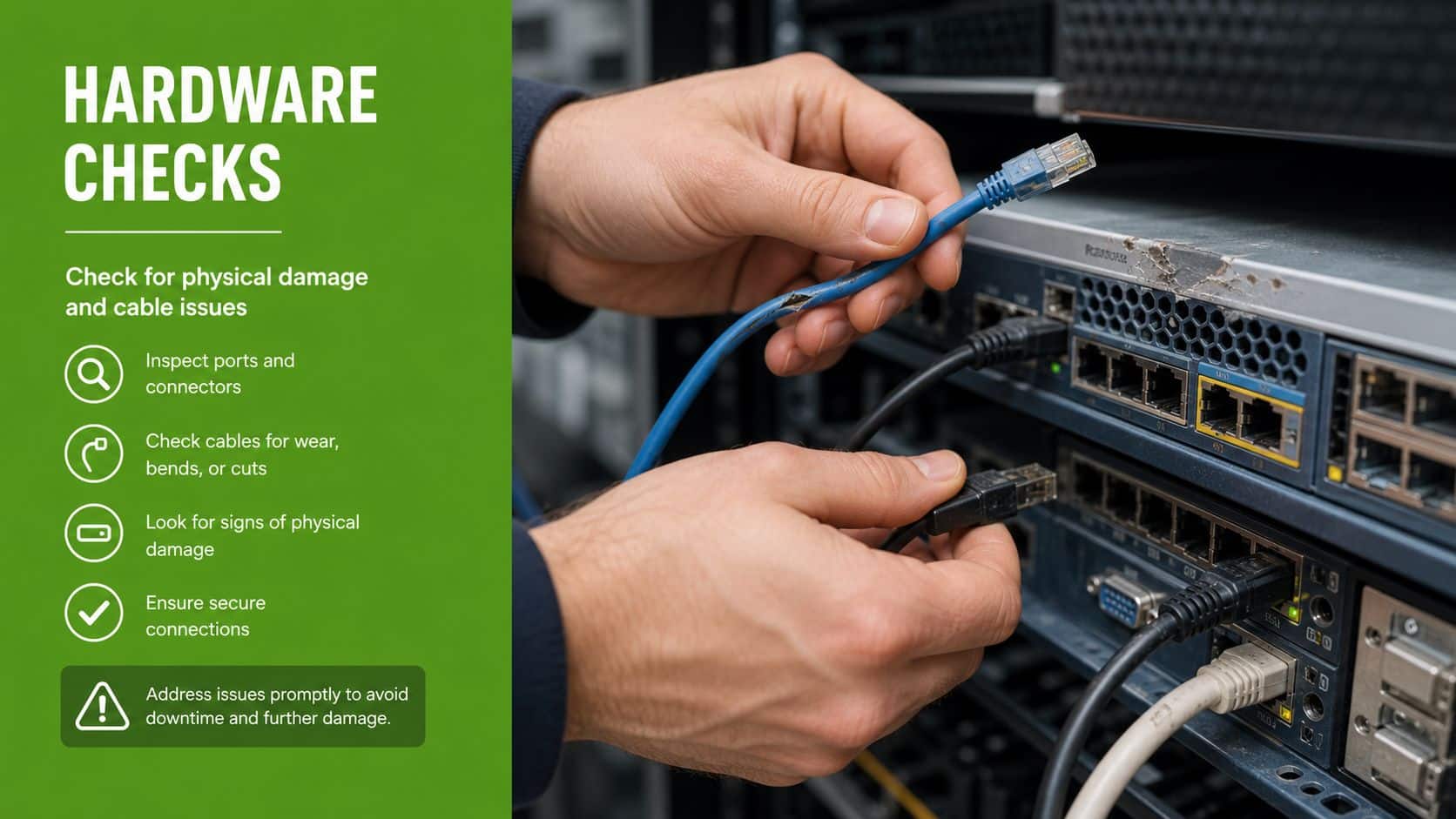
A hardware problem has a different feel. The touchpad might click but not track, it might disconnect when the palm rest is pressed, or it might work only intermittently after the laptop has been moved. Those are the patterns that point to a ribbon cable, a loose connector, or physical wear rather than a simple software toggle.
Read the symptom before you open the case
If the pad is totally unresponsive but the click still works, the internal connection may be failing. If movement returns when you press on the palm rest, that's a classic loose-connector clue. If the edge of the palm rest looks swollen or there's residue from a spill, the issue may be more serious than the touchpad alone.
Distinguishing disabled from failed saves time, and it keeps you from opening a chassis that may only need a setting changed.
A careful visual inspection is worth doing if the laptop is easy to access. Look for cracks in the surface, debris under the bezel, and signs that the touchpad sits unevenly in the opening. Precision touchpads often feel flatter and more integrated, while older Synaptics or ELAN units can give you a slightly different tactile response, but the bigger question is whether the module is physically intact and firmly connected.
Know when self-inspection stops making sense
Ultrabooks and thin laptops can make access awkward because the touchpad may be bonded into the palm rest assembly. That raises the risk of damaging clips, flex cables, or the surface finish if you force the panel open without the right tools. If the machine has seen liquid, impact, or visible swelling, the problem has likely moved beyond a quick at-home check.
At that stage, a technician can open the case, reseat the cable, inspect the module, and rule out motherboard-level trouble without turning the laptop into a guesswork project.
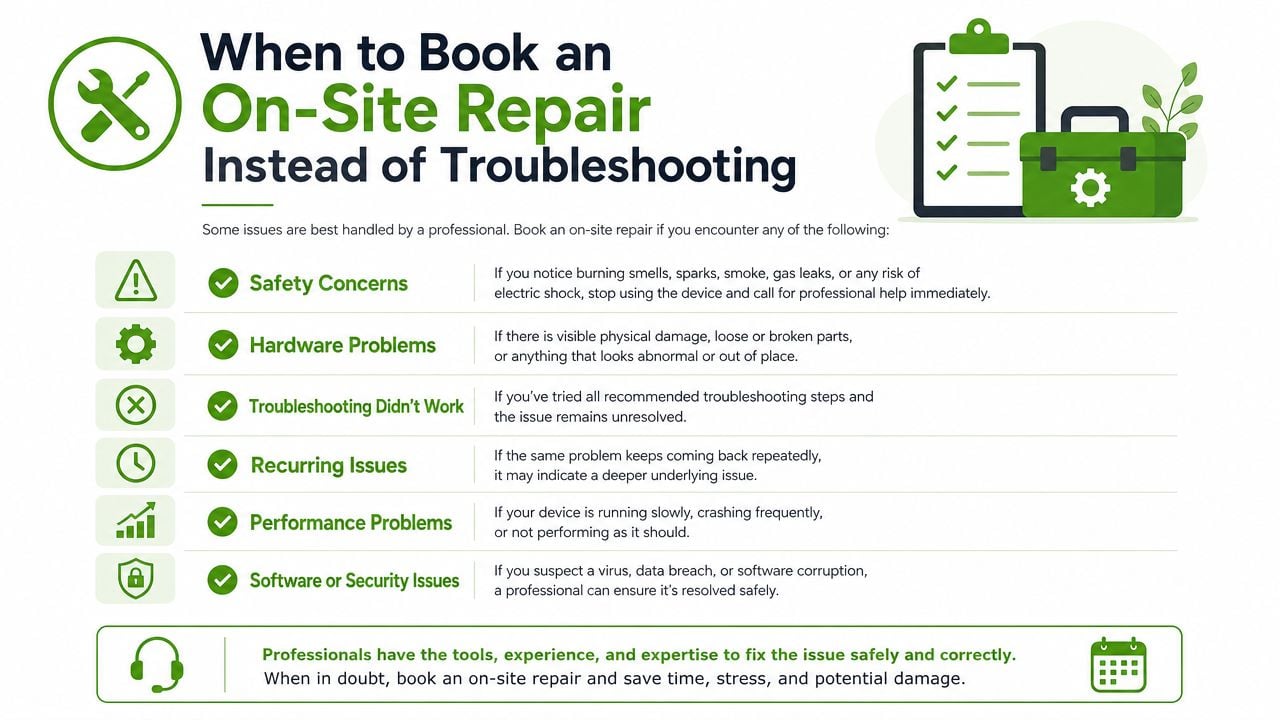
When to Book an On-Site Repair Instead of Troubleshooting
If the touchpad still won't respond after the settings check, the driver step, the firmware check, and a careful visual inspection, the next move is hands-on diagnosis. That's the point where on-site service makes more sense than another round of software toggles, because the laptop may need the ribbon cable reseated, the touchpad module replaced, or the mainboard checked for a deeper fault. For a plain breakdown of what an on-site visit usually includes, this local service overview is the right companion read.
A simple decision rule
Book a repair when the touchpad is still dead after the easy resets, when the pad works only intermittently, or when there are signs of liquid, swelling, or physical damage. Stop DIY work sooner on ultrabooks and premium laptops where the touchpad is tightly integrated into the palm rest, because opening the case can create a second problem before the first one is solved.
The best prevention is boring, and that's a good thing. Avoid changing settings while you're rushing through a project, keep the palm rest dry, and check the touchpad after major Windows updates so a setting change doesn't sit unnoticed for days.
For Edmonton homes and small businesses, Nerds 2 You Edmonton brings the repair to you, which saves you from packing up the laptop or waiting around for a shop drop-off. If your touchpad is still not working after the quick checks above, visit Nerds 2 You Edmonton and book an on-site visit that gets the machine diagnosed where you use it.
Contact Nerds 2 You for quality professional service
Experience the difference with our dedicated team of experts ready to assist you. Whether you need immediate support or have questions about our services, we are here to help. Reach out today and let us provide you with the reliable service you deserve. Your satisfaction is our priority and we guarantee a prompt response to all inquiries.
Discover more from Nerds 2 You
Subscribe to get the latest posts sent to your email.