

You're probably looking at a desk right now and thinking the same thing many Edmonton homeowners and small business owners think when an old desktop starts acting up: you want a cleaner setup, fewer cables, and a computer that doesn't take over the whole room. That's where an ASUS all in one can make a lot of sense.
An all-in-one gives you the screen and the computer in one unit, which is great when you want a tidy home office, front desk, kitchen workstation, or family computer area. But the clean design comes with trade-offs. Some ASUS models are easy to live with for years, while others only make sense if your needs are modest and you understand the repair limits from day one.
This is the part many buyers skip. They compare screen size and processor names, then realise later that upgrades are narrower than they expected, or that setup details matter more than the brochure made it sound. A practical buyer should look at ownership, not just specs.
Table of Contents
- Is an ASUS All in One PC Right for You
- What Makes an All in One PC Different
- Exploring Popular ASUS All in One Models
- Understanding Upgradeability and Repair Limitations
- Setting Up and Migrating Data to Your New PC
- DIY Troubleshooting for Common ASUS AIO Issues
- When to Call Nerds 2 You for On-Site Support
Is an ASUS All in One PC Right for You
An ASUS all in one works best for people who want a simple, space-saving desktop without the usual tower, cable bundle, and separate monitor. If your computer sits in a condo office, reception area, kitchen corner, or shared family workspace, that cleaner footprint matters every day.
For many Edmonton households, the appeal is practical. You unbox one main unit, connect power, add the keyboard and mouse, and you're close to done. That's much less intimidating than building a traditional desktop setup from separate pieces. If you want a quick look at the kinds of systems and service scenarios these machines fit into, this overview of desktop and all-in-one computer support is useful.
Good fit for some users, poor fit for others
An ASUS AIO usually makes sense if you want:
- A tidy desk: Less clutter and easier cable management.
- A shared family machine: Web browsing, documents, school portals, email, and video calls.
- A reception or admin workstation: Clean appearance in client-facing spaces.
- A home office desktop: Enough power for office apps, browser tabs, and everyday productivity.
It's less ideal if you want:
- Heavy gaming flexibility: A traditional tower gives you far more room to upgrade graphics and cooling.
- Long-term modular upgrades: AIOs are more limited internally.
- Frequent self-repair: Access is tighter, and parts aren't as interchangeable.
Practical rule: Buy an all-in-one for convenience and clean design, not for endless hardware expansion.
The biggest mistake I see is buying an AIO for the wrong reason. If you love the look and want a dependable daily-use desktop, that's sensible. If you expect it to behave like a full-sized custom tower over the long run, it probably won't.
What Makes an All in One PC Different
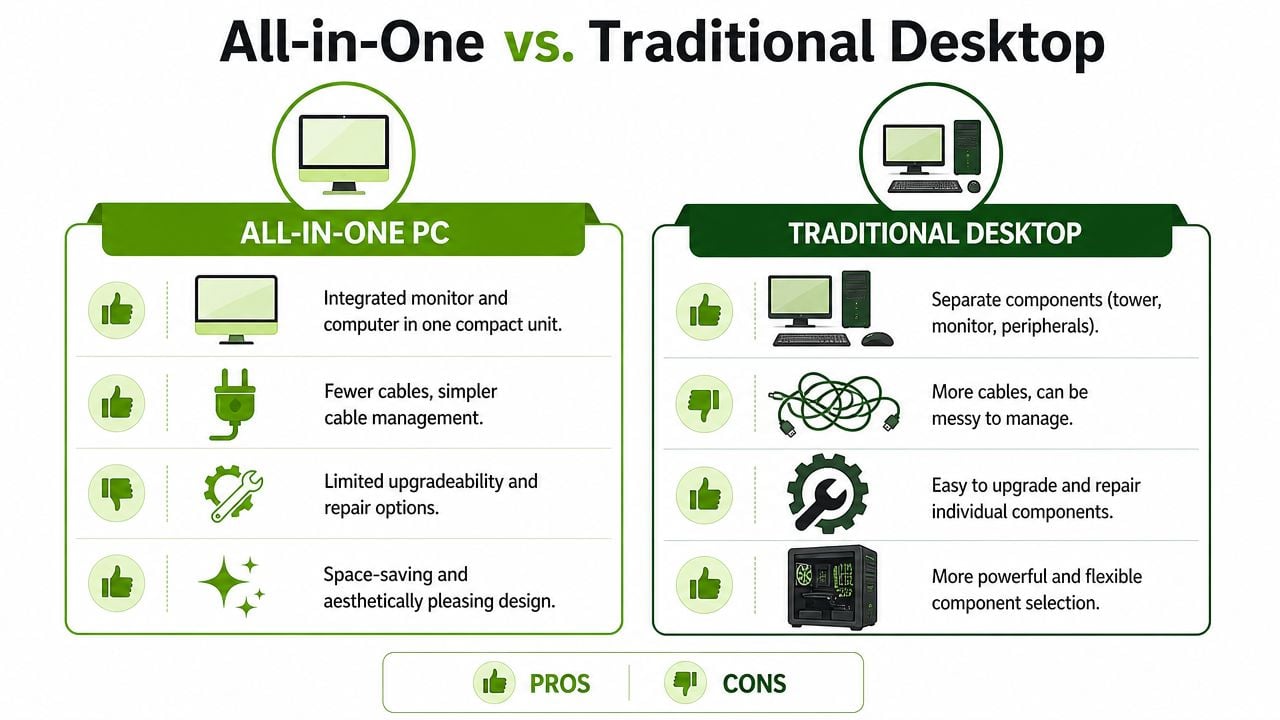
An all-in-one PC is basically a desktop that borrows the design logic of a laptop. The main components sit behind the screen instead of inside a separate tower. You still use a keyboard and mouse, but the computer and monitor are combined into one housing.
That design is a big reason the category keeps growing. The global All-in-One PC market was valued at $28.5 billion in 2025 and is projected to reach $45.8 billion by 2034, growing at a 6.0% CAGR, according to Dataintelo's All-in-One PC market report.
Why people like them
The first benefit is obvious the moment you place one on a desk. An AIO takes up less room, looks organised, and usually needs fewer visible cables. For homes, that means less visual clutter. For offices, it means a cleaner front counter or workstation.
The second benefit is setup simplicity. Most users are more comfortable with one integrated unit than with a monitor, tower, power supply routing, and peripheral planning. That matters when the buyer isn't a hobbyist and just wants the machine working quickly.
What you give up
The clean design also changes how repairs and upgrades work. A tower desktop lets you swap parts with far less effort. With an AIO, internal access is tighter, some components may be fixed in place, and major hardware failures can be more frustrating to deal with.
Here's the practical trade-off:
| System type | Best for | Less ideal for |
|---|---|---|
| All-in-One PC | Space saving, cleaner desks, straightforward setup | Deep upgrades, easier internal repairs |
| Traditional desktop | Custom builds, part swaps, long upgrade path | Cable clutter, larger footprint |
A good AIO reduces desk mess. It does not replace the flexibility of a tower.
That's why I usually tell buyers to decide based on lifestyle first. If you value a neat workspace and don't plan to tinker inside the machine often, an ASUS all in one can be a smart fit. If you already know you'll want major hardware changes later, a conventional desktop usually ages better.
Exploring Popular ASUS All in One Models
ASUS doesn't build one kind of all-in-one for everyone. Some models lean toward style, display quality, and home use. Others are built with business practicality in mind, where reliability, straightforward deployment, and storage options matter more than visual flair.
ASUS also has strong brand momentum in the broader PC space. By Q1 2025, ASUS reached a 27.9% market share in the laptop segment, ahead of Lenovo at 22.6%, according to Electro IQ's ASUS statistics and revenue summary. That doesn't tell you which AIO to buy, but it does show ASUS is a serious name in day-to-day computing.
Home and creative use
For home users, the Zen AiO line is usually the more appealing direction. These systems tend to focus on display quality, cleaner industrial design, and a nicer fit for a modern office or living area. They're often a better match for people who care about how the machine looks on the desk and who spend a lot of time in video calls, documents, web apps, media playback, and light creative work.
A home buyer should pay attention to:
- Screen experience: Touch support and viewing angles matter if the PC sits in a shared room.
- Noise and heat: A quiet machine is easier to live with during long workdays.
- Port layout: Side and rear ports affect how easy it is to plug in storage, printers, and accessories.
If you're comparing ASUS across different form factors before committing, this outside guide on why ASUS can be a smart choice for Asus laptops at myhalo is useful context. It won't replace a hands-on desktop decision, but it helps frame ASUS's broader strengths in everyday computing.
Business and front office use
For business environments, the ExpertCenter family is usually the more practical choice. These systems tend to fit reception desks, admin offices, clinics, and small business workstations where dependable operation matters more than premium styling.
One example is the ASUSPRO A4321. It has a 19.5-inch commercial display and supports business-oriented storage options, including up to a 2TB SATA III hard drive or a 128GB SSD. It also supports a dual-storage setup through ASUS Hyper Storage, combining a 1TB HDD and 128GB SSD. In the referenced product material, that setup can reduce application latency by up to 40% compared to single-HDD systems, which is a practical advantage for office responsiveness when opening common programs and files, as shown in the ASUSPRO A4321 specification document.
The ASUS A3402 is another useful reference point for office buyers. ASUS lists it with up to a 12th Gen Intel Core i7, up to 32 GB DDR4 memory, and up to 4.7 GHz operation, which is enough for demanding multitasking, remote desktop sessions, and heavier productivity loads in a small office environment.
ASUS All-in-One Model Comparison
| Feature | ASUS Zen AiO (Home/Creative) | ASUS ExpertCenter (Business) |
|---|---|---|
| Primary use | Home office, family use, light creative work | Admin desks, business workflows, front office use |
| Design priority | Premium look, display appeal, modern workspace fit | Function, reliability, business deployment |
| Best buyer | Home users who want style and simplicity | Small businesses that need stable daily operation |
| Upgrade mindset | Usually buy it for convenience | Usually buy it for workflow and storage practicality |
| Example strengths | Good fit for shared spaces and video-heavy workdays | Storage flexibility, business-oriented configurations |
When buyers ask me which family makes more sense, the answer usually comes down to where the machine will live and who depends on it. A family office and a front counter have different needs. ASUS covers both, but you have to match the model to the actual job.
Understanding Upgradeability and Repair Limitations
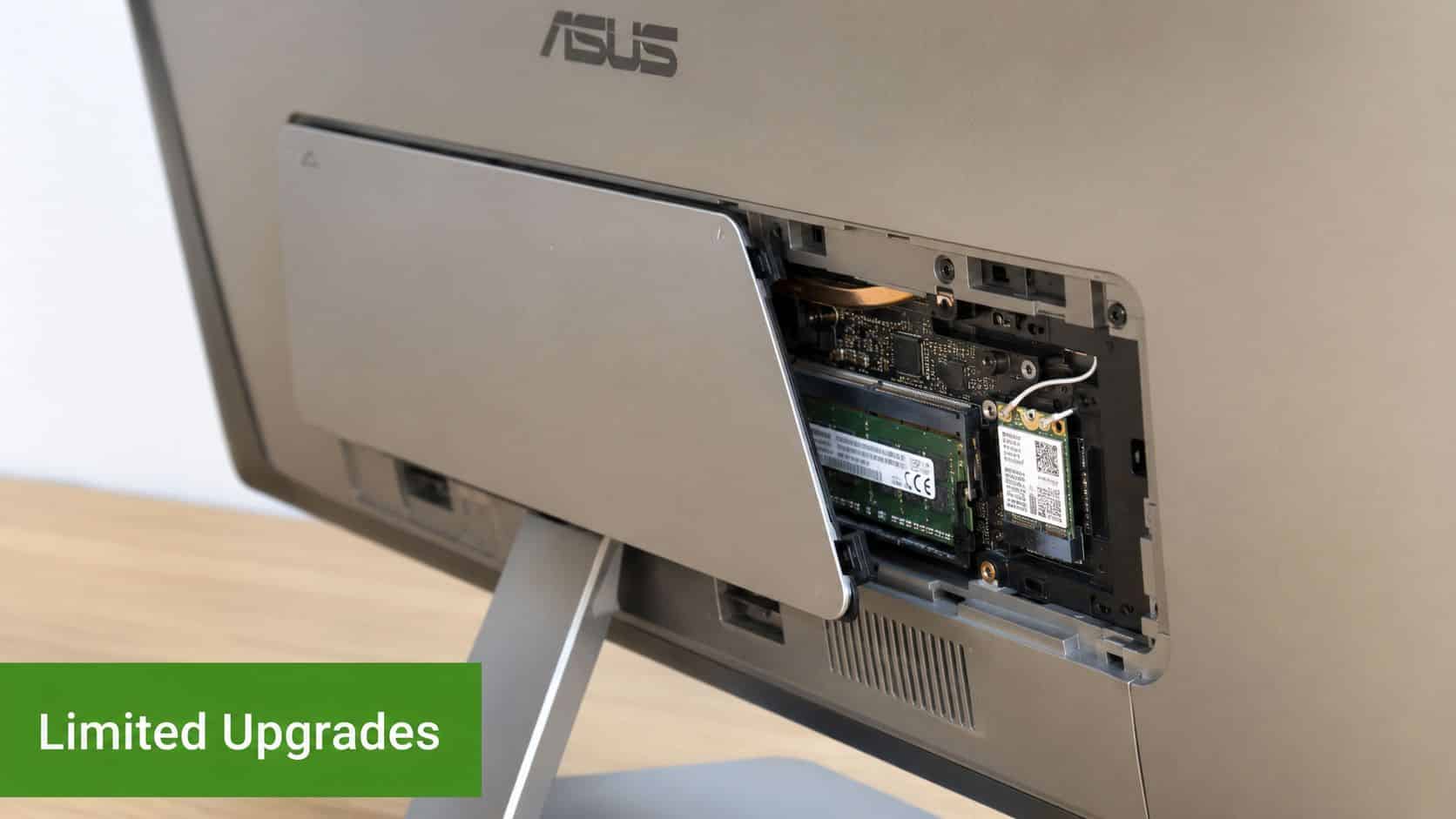
This is the part that matters most after the honeymoon period. An ASUS all in one can be pleasant to own when it works well, but the integrated design limits how much you can change later.
What you can usually upgrade
On many AIO systems, the most realistic upgrade targets are:
- RAM: If the model allows access, adding memory can help with multitasking.
- Storage: Replacing a slow drive or adding faster storage often gives the most noticeable improvement.
- External accessories: Webcam, speakers, keyboard, mouse, and backup drives are easy wins.
If your machine feels cramped during daily use, memory and storage are the first places to look. For buyers or owners considering that route, a local guide to PC RAM upgrade service can help you understand when a memory upgrade is worth doing and when it won't solve the actual problem.
What usually stays fixed
The limits are where many buyers get surprised. On an AIO, the CPU, motherboard, and graphics hardware are often not practical upgrade parts. Even when a repair is technically possible, labour complexity and part availability can make it less attractive than on a tower.
That leads to a few long-term realities:
- Major failures can be more expensive to resolve than in a traditional desktop.
- Cooling design is tighter, so dust and heat management matter more over time.
- Screen and computer are one unit, so a serious display issue affects the entire workstation experience.
Worth remembering: The cleaner the design on the outside, the less forgiving it often is on the inside.
If you buy an AIO with enough memory and storage from the start, ownership tends to go more smoothly. If you buy the cheapest version and assume you'll upgrade everything later, that plan often falls apart. With these machines, smart configuration at purchase matters more than with a modular tower.
Setting Up and Migrating Data to Your New PC
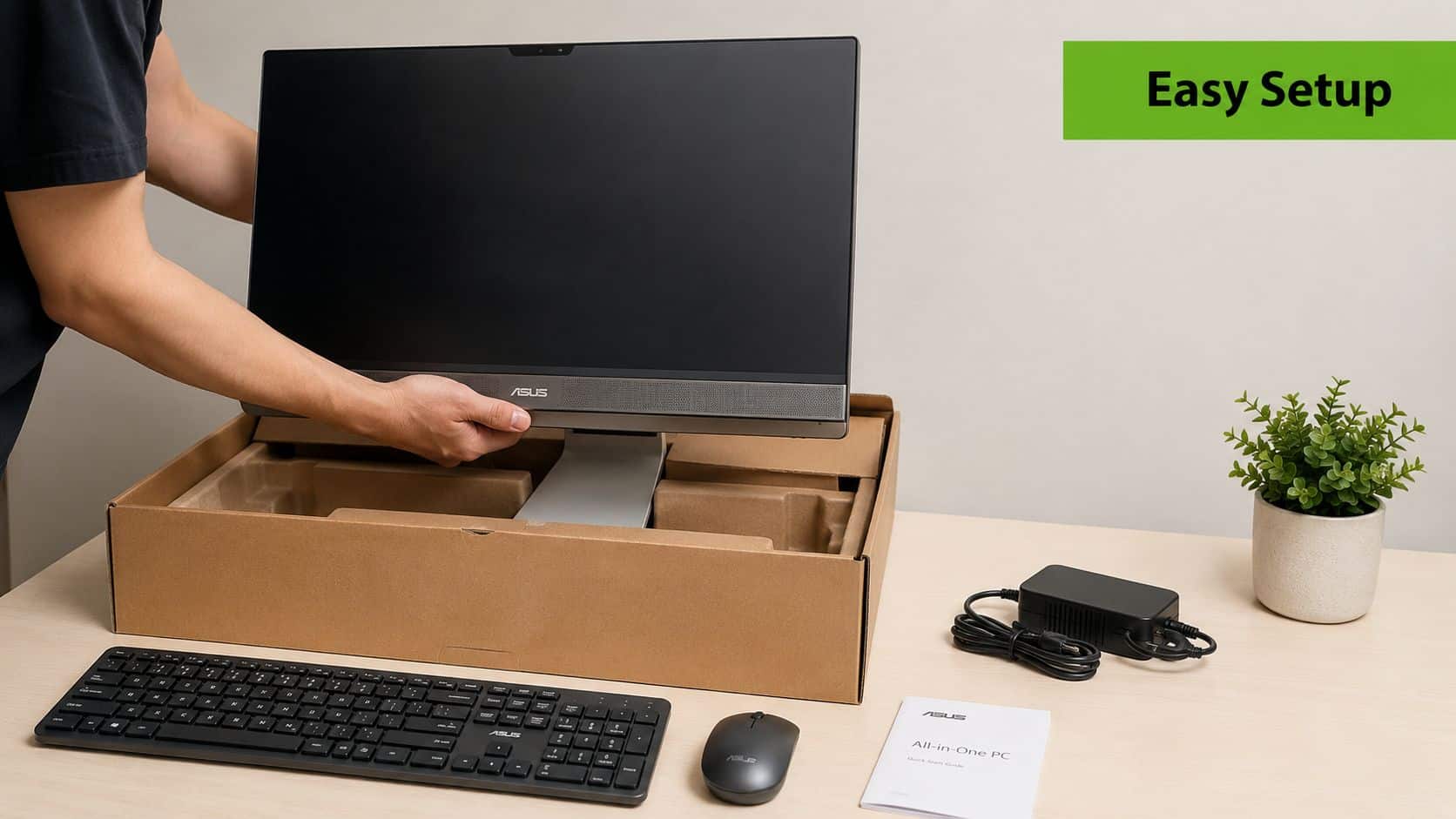
A new ASUS all in one is usually easy to unbox, but the first hour matters. A rushed setup can leave you with the wrong keyboard layout, messy file migration, duplicate user folders, or missing email and printer access.
First boot checklist
Start with the basics:
- Place it properly: Leave room for airflow behind the unit.
- Connect only essentials first: Power, keyboard, mouse, and network.
- Complete Windows setup carefully: Don't rush through region and privacy screens.
- Run updates before installing everything else: This reduces driver and setup conflicts.
For the ASUS A3402, users in Canada must select “Canada” during Windows 11 Pro setup to ensure the correct regional keyboard layouts, Wi-Fi channel restrictions, and privacy settings, according to the ASUS A3402 product page. That sounds minor, but it affects the day-to-day experience more than people expect.
Choose the correct region during setup the first time. Fixing it later is possible, but it's more annoying than it should be.
Moving files without making a mess
Data migration is where people often create problems for themselves. Copying everything from an old machine without sorting can bring over junk files, duplicate photos, and outdated folders you don't need.
A cleaner approach is:
- Documents first: Personal files, desktop items, and work folders.
- Photos next: Move them in clearly named folders.
- Browser data and bookmarks: Export or sign into the browser account you regularly use.
- Email and cloud storage: Verify sync before deleting anything from the old machine.
If the old computer is unstable, don't keep pushing it. Copy the critical data first. Worry about software cleanup later.
For anyone who doesn't want to spend a weekend sorting user accounts, email setup, printer installs, and file transfer, on-site help with new computer setup and data transfer in Edmonton can save a lot of frustration. That's especially true when the old PC has years of accumulated files and the new one needs to be ready for work right away.
DIY Troubleshooting for Common ASUS AIO Issues
Most ASUS AIO problems start small. The machine feels sluggish. Wi-Fi drops at random. The display looks blurry or the colours seem off. These are often fixable without opening the computer.
When the system feels slow
Start with software before assuming hardware failure.
- Check startup apps: Too many launch items can drag boot time down.
- Clear temporary files: Windows collects clutter over time.
- Confirm available storage: A nearly full drive can make the whole system feel sticky.
- Restart properly: Sleep mode for weeks at a time can create odd behaviour.
If the slowdown started suddenly, look for a recent app install, browser extension, or security scan conflict. Slowdowns that build gradually often point to storage strain, background software load, or age-related wear.
When Wi-Fi keeps dropping
AIO users often blame the computer immediately, but the network path matters just as much as the device.
Try this sequence:
- Restart the modem and router.
- Forget the wireless network and reconnect.
- Run Windows updates and check the wireless driver through normal system maintenance tools.
- Test the PC in a different room or closer to the router.
If the connection only fails on one machine, the issue is likely local to that device. If every device struggles, the router placement or internet service may be the primary problem.
If Wi-Fi becomes unstable right after setup, double-check region and network settings before chasing hardware faults.
When the display looks off
Display complaints on all-in-ones are often configuration issues rather than hardware defects.
Look at:
- Resolution settings: Make sure Windows is using the panel's recommended resolution.
- Scaling settings: Text can look fuzzy if scaling and resolution don't play nicely.
- Colour profiles: Some users switch settings accidentally and think the panel is failing.
- Physical cleaning: Smudges and film on the screen can make contrast look worse than it is.
Call for help when symptoms move beyond simple checks. Flickering, no image, repeated shutdowns, odd fan noise, and power issues usually need hands-on diagnosis. DIY works best for software, settings, and basic external checks. It doesn't work well when internal hardware starts to fail.
When to Call Nerds 2 You for On-Site Support
Some problems need more than patience and a reboot. If an ASUS all in one won't power on, keeps freezing after updates, has internal hardware issues, or needs careful data recovery from an older machine, it's time for hands-on service.
Problems that need hands-on help
Local support makes the biggest difference when the issue is physical, persistent, or business-critical.
Examples include:
- The PC won't start: This can involve power supply faults, board issues, or failed internal components.
- Repeated crashes: Especially when updates, driver cleanup, and basic maintenance haven't fixed it.
- Upgrade uncertainty: Some AIO models are easy to open incorrectly and harder to reassemble safely.
- Office downtime: If a front desk or admin workstation is down, waiting and guessing costs time.
For business readers comparing broader support models, this outside article on managed IT services for BPOs offers useful context on what structured support can look like in more complex environments.
Why on-site support matters in Edmonton
In Alberta, 78% of small businesses using remote-only IT support report critical downtime at least quarterly, compared to 22% using on-site support models, according to the Nerds 2 You Edmonton Yelp listing. That gap lines up with what many small offices experience in real life. Remote help can handle some software tasks, but it can't reseat hardware, inspect physical damage, or sort cabling and network gear in person.
Nerds 2 You does not provide remote services. Nerds 2 You doesn't provide full MSP services but does provide ongoing support and network monitoring for small and medium businesses.
That matters because it sets the right expectation. If you need someone to come to your home or office, work directly on the machine, help with setup, repairs, networking, or practical troubleshooting, that on-site model fits. If you're shopping for a full outsourced enterprise IT department, that's a different service category.
If your ASUS all in one needs setup help, troubleshooting, upgrades, or on-site repair in Edmonton, contact Nerds 2 You Edmonton. They come to your home or office, which is often the fastest way to solve the problem without hauling your computer across the city.
Contact Nerds 2 You for quality professional service
Experience the difference with our dedicated team of experts ready to assist you. Whether you need immediate support or have questions about our services, we are here to help. Reach out today and let us provide you with the reliable service you deserve. Your satisfaction is our priority and we guarantee a prompt response to all inquiries.
Discover more from Nerds 2 You
Subscribe to get the latest posts sent to your email.