
You've got the bulb in the cart, the speaker on the shelf, and the thought in your head is simple, I just want the lights to work when I say so. In a lot of Edmonton homes, that's exactly where smart lighting starts, with one room, one bulb, and one voice command that should make life easier instead of adding another app to babysit.
Smart light bulbs with Google Home are popular because they hit a practical sweet spot. They're affordable compared with bigger smart-home projects, they're easy to notice in daily use, and they fit the way people live, walking in with groceries, settling in for the evening, or turning off lights from bed without crossing the room.
Table of Contents
- Why Smart Lighting Is Your Best First Step
- Choosing the Right Smart Bulb for Google Home
- Connecting and Configuring Your Bulbs in the Google Home App
- Mastering Voice Commands and Routines
- Troubleshooting Common Smart Bulb Problems
- When to Call Nerds 2 You for On-Site Help
Why Smart Lighting Is Your Best First Step
A smart bulb is often the first device people keep using. It's visible, it solves a daily annoyance, and it doesn't ask you to rebuild the rest of the house around it. That's a big reason it keeps showing up in real homes instead of living as a gadget drawer novelty.
Residential users accounted for 46.73% of 2025 smart-lighting revenue, and sub-USD 15 smart-bulb pricing plus voice-assistant convenience were key demand drivers, according to the industry data cited by CE Pro. That helps explain why this category feels approachable for homeowners who want a practical starting point, not a science project. Read the supporting market context
Practical rule: start with the room where a voice command will actually save you effort, not the room that looks most futuristic.
For many Edmonton households, that means a hallway, bedroom, living room lamp, or porch light. The value isn't just novelty, it's repeat use. Once a bulb is tied into Google Home, you can build habits around it, like turning on a lamp before the room gets dark or setting a favourite scene for evenings.
If you're thinking bigger later, a smart bulb is also a good first test of whether you enjoy home automation at all. If you want a broader plan for connected devices, it helps to look at smart home services as a category, not just a single bulb.
Choosing the Right Smart Bulb for Google Home
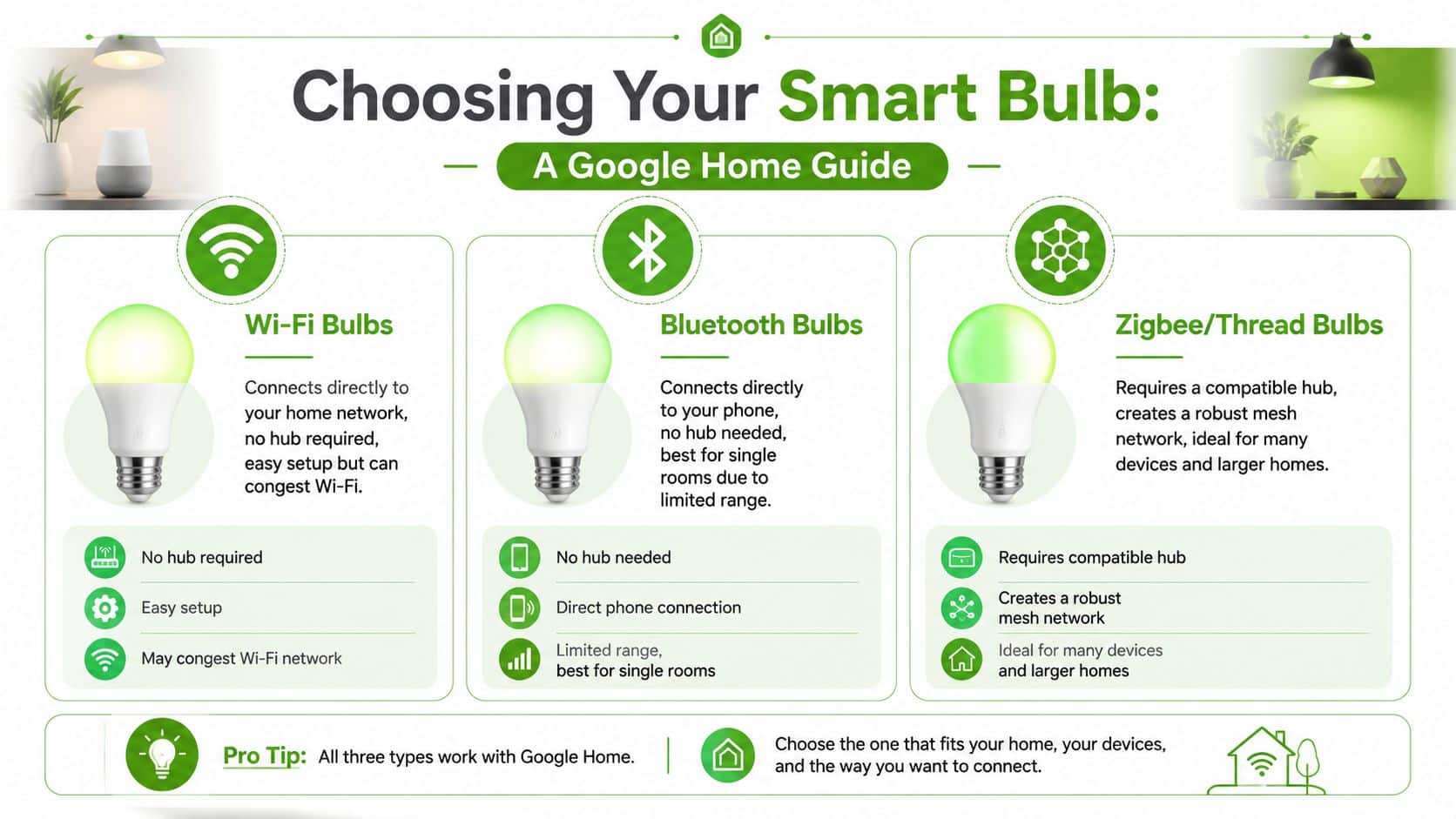
The best bulb is the one that fits your house, your network, and your patience. A lot of setup trouble starts before the bulb is even installed, because people buy a model that doesn't match their assistant platform or their home layout.
Compare the connection types
| Technology | How It Works | Pros | Cons |
|---|---|---|---|
| Wi-Fi | Connects directly to your home network | Simple for many homes, no hub needed | Can add more traffic to your Wi-Fi |
| Bluetooth | Connects through your phone nearby | Easy for very small setups | Limited range, best for single rooms |
| Zigbee or Thread | Uses a mesh-style connection through compatible hardware | Good for larger setups and many devices | Usually needs a compatible hub |
Matter support is worth checking early, because Matter bulbs can be onboarded through Google Home by scanning the bulb's QR code, which cuts out some of the friction people hit with older app-linking flows. That's especially handy if you move bulbs between rooms or want a setup that feels less tied to one brand's app. Matter onboarding is one of the clearest setup shortcuts
A useful way to think about the choice is this. Wi-Fi is the easiest mental model for many buyers, Bluetooth is the most limited, and Zigbee or Thread makes sense when you expect a bigger, more coordinated setup. If you already know you want multiple bulbs in one room or across the house, the stronger network options can be worth the extra hardware.
For colour choices, the bulb itself matters, but so does how you plan to use it. If you want a practical reference while deciding on warm white versus vivid scenes, selecting ideal lighting colors is a helpful resource to keep nearby.
Good buying habit: check Google Home support, then check whether the bulb needs a bridge or hub before you click buy.
Connecting and Configuring Your Bulbs in the Google Home App
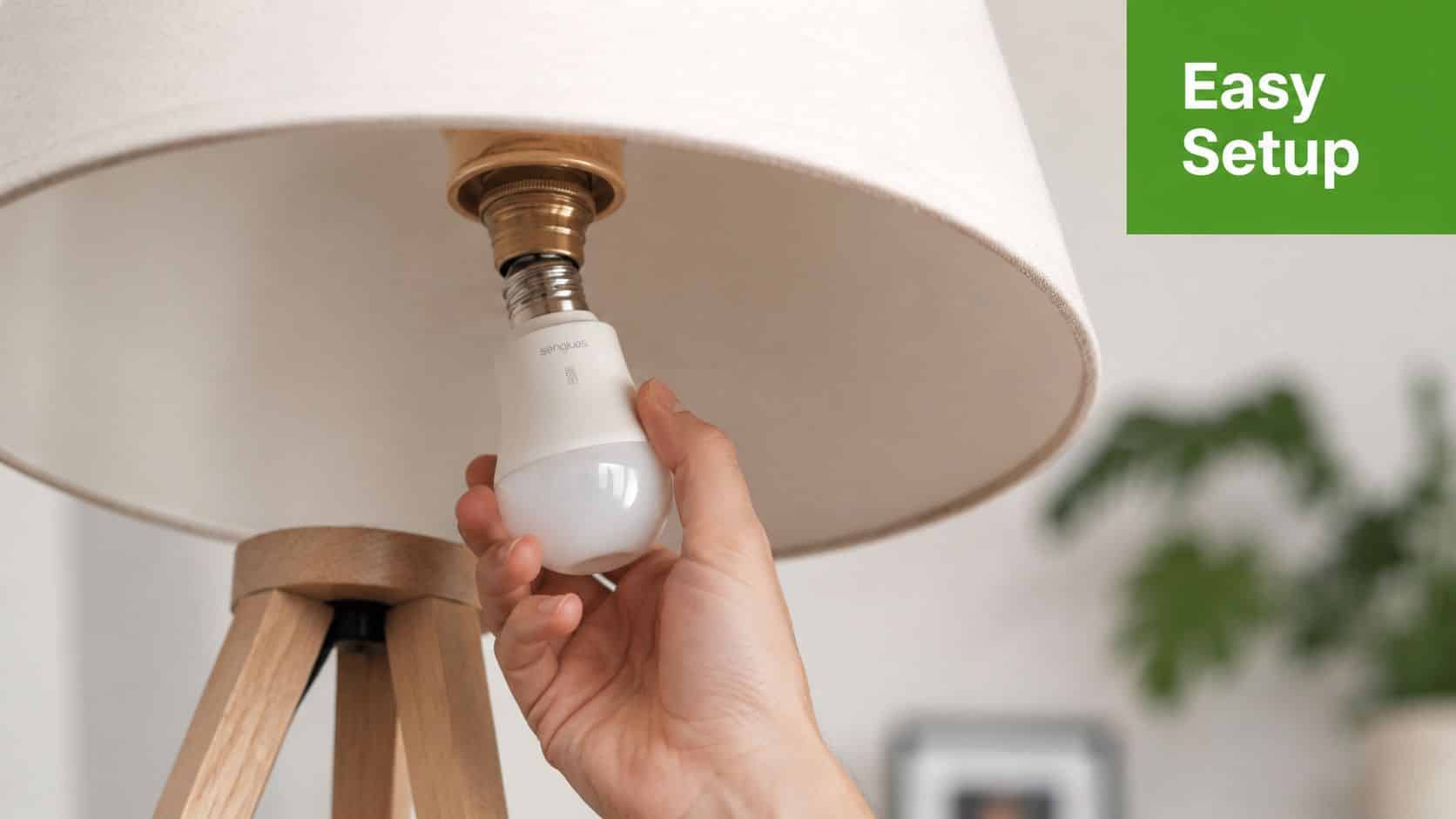
The physical part is simple. Screw in the bulb, turn the power on, and make sure your Google Nest or Home speaker, or display, is already set up in the same room if that's how you plan to control the bulb. Google's setup flow can involve adding the device in the Google Home app or linking the maker's service, and some brands need a separate bridge or hub. Google's setup guidance is the place to verify those brand-specific steps.
Start with the room, not the name
Once the bulb appears in the app, assign it to the right room first. That makes voice control feel natural because Google already uses the speaker or display location as part of the command context. If the bulb is in the living room, put it in the living room in the app.
Avoid packing the room name into the bulb's own device name. Google already infers room context from the speaker or display location, so a name like “Ceiling Light” is usually cleaner than “Living Room Ceiling Light”. This reduces voice-command confusion when you have several bulbs in one space, especially if you later add lamps, ceiling lights, and accent lighting.
"Name the device for what it is, not where it lives."
For households that want a more general setup walkthrough before pairing lights and other gear, the process behind how to set up Wi-Fi can be a useful companion read, because smart bulbs depend on a stable network just like every other connected device.
If setup stalls
If the app can't find the bulb, Google says some brands may need a separate bridge or hub, and a factory reset may be necessary before trying again. Rebooting the speaker or display before another attempt can also help after a failed setup. That isn't glamorous, but it's often the difference between a half-installed bulb and one that responds properly.
A lot of first-time setups fail because the person names the bulb badly, skips the room assignment, or assumes the bulb will behave like a dumb light after power cycling. Taking five careful minutes here saves a lot of voice-command frustration later.
Mastering Voice Commands and Routines
Once the bulb is online, basic on and off commands are only the start. The full potential is unleashed when you use Google Home the way it was meant to be used, with short commands that match real habits, not just tech demos.
A living room bulb can respond to dimming, colour changes, and grouped control. You can say things like set the lamp to 30%, make the living room lights blue, or use a group name so several lights act together. That's where the system stops feeling like a single device and starts acting like part of the room.
For a clean setup and fewer moving parts, it's smart to simplify your smart home setup by deciding which lights belong together before you create routines. That way your commands stay short and predictable.
Build routines around moments, not gadgets
A good routine should match a habit you already have. A Good Morning routine might brighten bedside lighting, while a Movie Time routine might dim the lamps and switch the room to a softer colour. The routine matters more than the exact bulb model because it turns separate actions into one voice command.
You can also tie lighting to a simple daily pattern. If you use the same lamp every evening, group it with other nearby lights and give the whole group one easy name. That makes it far more likely you'll use the feature instead of forgetting it exists.
Practical rule: keep commands short, and keep group names obvious enough that anyone in the house could guess them.
That simplicity pays off when someone else in the home needs to control the lights. The less you rely on memory, the more useful the system becomes.
Troubleshooting Common Smart Bulb Problems
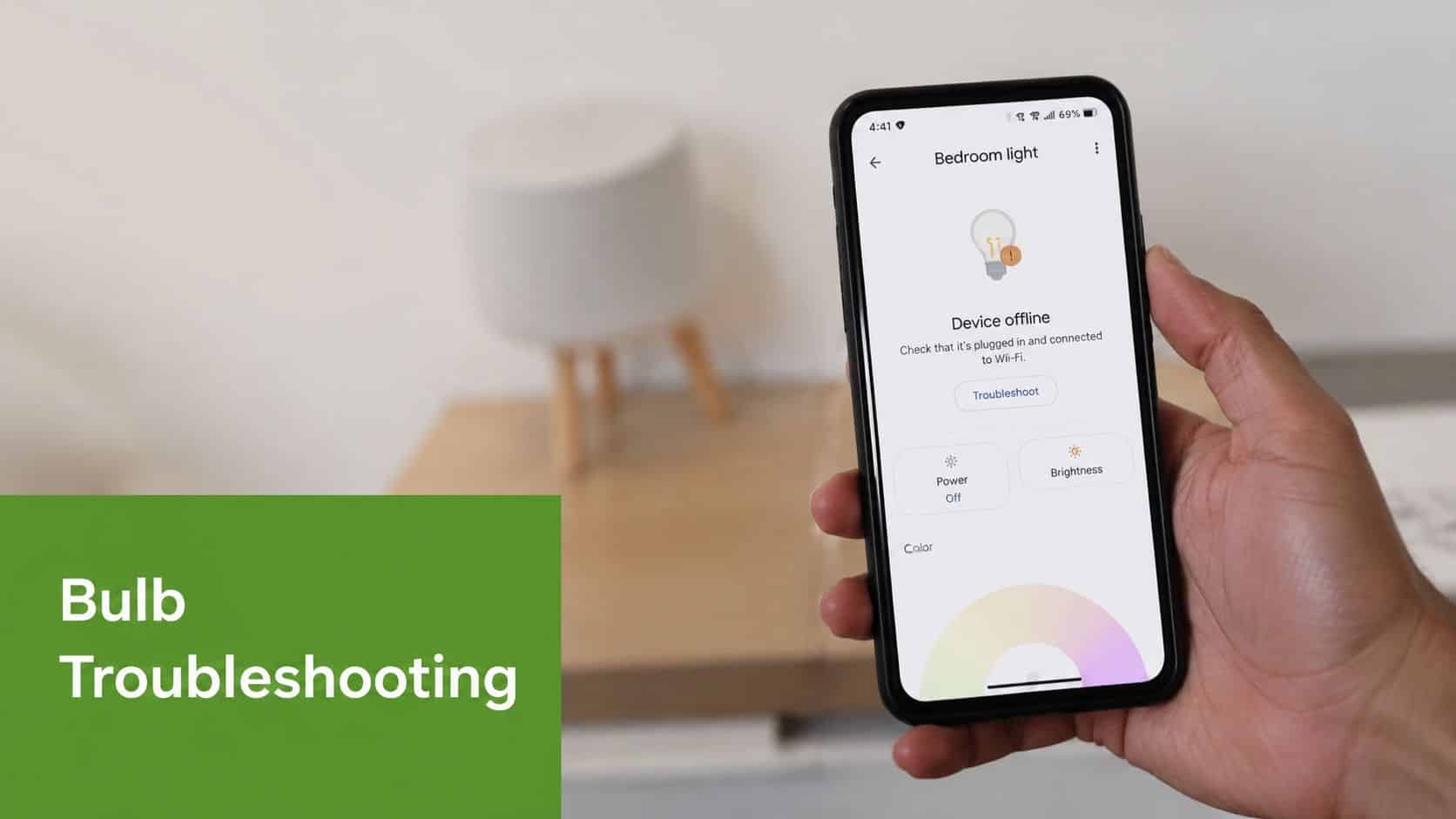
The most common problem is the least exciting one. Someone flips the wall switch off, and the smart bulb disappears from the app. That happens because the bulb needs power to stay connected, and Google's Canadian support docs note that it can take up to one minute after power is restored to reconnect. Google's Canadian guidance on power behaviour makes it clear why this frustrates households that still use wall switches normally.
Fix the power problem first
If the bulb is unresponsive, check the wall switch before anything else. A smart bulb that has no power can't respond to the app, voice commands, or routines. If the switch has been turned back on, give it a short moment to reconnect before you assume the setup failed.
The next common issue is a bulb that keeps dropping off the network. That usually points to placement, interference, or a router problem rather than the bulb itself. If the bulb works in one room but not another, the house layout may be part of the issue.
Use simple checks before a full reset
Try these in order.
- Confirm constant power: make sure the wall switch stays on.
- Wait for reconnection: after power is restored, give the bulb time to come back online.
- Check the room assignment: a bulb in the wrong room can look “lost” even when it's connected.
- Verify the ecosystem match: if the bulb was bought for another platform, it may never join Google Home cleanly.
If colour or brightness controls seem wrong, open the maker's app as well as Google Home. Some bulbs behave better when their own app is used for firmware or colour calibration, while Google Home handles the day-to-day commands.
The biggest lesson is simple. Don't reset everything first. Start with power, then the network, then the app relationship. That order saves time and usually fixes the issue faster than a full factory reset.
When to Call Nerds 2 You for On-Site Help

Some problems are bigger than a bulb. If several devices keep dropping, one room has weak connectivity, or your smart home only works when everything is standing still, the issue is probably in the network design, not the light itself. That's where hands-on diagnosis matters more than another app retry.
Nerds 2 You Edmonton's service model is explicitly on-site, with “We come to you!” for homes or businesses in the Edmonton area, and the company provides 587-772-NERD (6373) for appointments. Their business model is built around in-person service, not remote-only support, which makes sense when the problem involves signal strength, interference, or device behaviour that needs to be seen in the room. Their local profile reflects that mobile model
If you want to compare what onsite technical help looks like in another context, reliable security system repairs are a good reminder that some home technology issues really do need a person on the property, not just a chat window. The same is true when bulbs, Wi-Fi, and voice control all have to work together.
For a deeper look at what a local visit can cover, the overview of what on-site computer repair includes is useful reading. And for small and medium businesses, ongoing support and network monitoring can make sense when lighting, Wi-Fi, and office devices all need to stay stable at the same time.
If you're ready to stop guessing and get your bulbs, Wi-Fi, and Google Home working the way they should, contact Nerds 2 You Edmonton and book an on-site visit.
Contact Nerds 2 You for quality professional service
Experience the difference with our dedicated team of experts ready to assist you. Whether you need immediate support or have questions about our services, we are here to help. Reach out today and let us provide you with the reliable service you deserve. Your satisfaction is our priority and we guarantee a prompt response to all inquiries.
Discover more from Nerds 2 You
Subscribe to get the latest posts sent to your email.